How to prepare a drawing for an injection mold quote
Published:
To quote an injection mold we need a 3D model or a drawing of the part, its material and the planned volume. The more precise the data, the faster and more accurate the estimate of cost and lead time. Below is what exactly to prepare and how to avoid extra back-and-forth.
Which files to send
The most convenient is a 3D model in STEP (STP): every common CAD system opens it without losing geometry. DWG or DXF work for flat drawings, PDF for drawings with dimensions and tolerances. Several files can be packed into a ZIP.
The form on the website accepts STEP, STP, DWG, DXF, PDF and ZIP up to 4 MB. If the file is larger, choose sending by email in the form and attach it to the letter.
What to state besides the geometry
The model alone does not answer several questions that shape the design and the price of the mold:
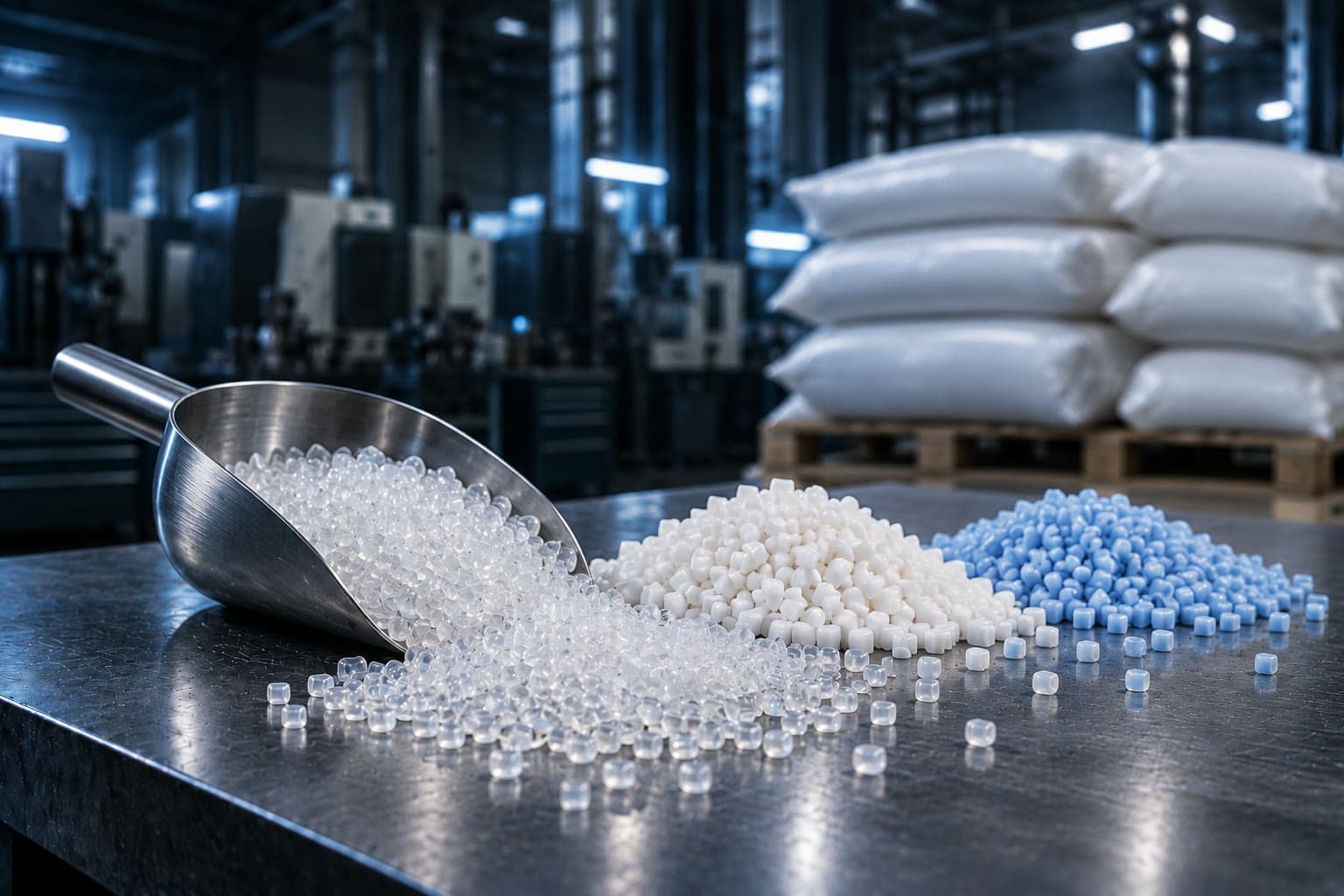
- the part material — PP, PE, ABS, PC, PS, PET or another: it determines shrinkage and therefore the dimensions of the forming parts;
- the annual volume or batch size — it determines how many cavities to build into the mold;
- critical dimensions and tolerances — where the part mates with others;
- surface requirements: gloss, matte, texture;
- the colour and the areas where the part must not show gate or ejector marks;
- whether a mold or a sample of the part already exists.
A part that is easy to mold
Some quality problems are built in at the design stage of the part. Even wall thickness reduces sink marks and warping. Draft on vertical walls lets the part leave the mold easily. Radii instead of sharp corners lower internal stress.
Undercuts — side holes, protrusions, threads — need moving units in the mold, and the mold becomes more complex. If the drawing is not final yet, these points are worth discussing before the mold is made: a small change to the part sometimes simplifies the tooling noticeably.
If there is no drawing
You can send a sample of the part or photos with the main dimensions. A 3D model will then be needed first, made from the sample — this stage is agreed when the task is assessed.
What happens after the request
We assess the task, ask follow-up questions if data is missing, and propose the design, cost and lead time. Once the solution is agreed, mold making begins.
Service: Injection molds