What drives the cost of an injection mold
Published:
The cost of an injection mold depends on the size and complexity of the part, the number of cavities, the steel and its heat treatment, the runner system, surface and accuracy requirements, and the tool life you need. Below is how each factor affects the price and where you can save without losing quality.
Part size and complexity
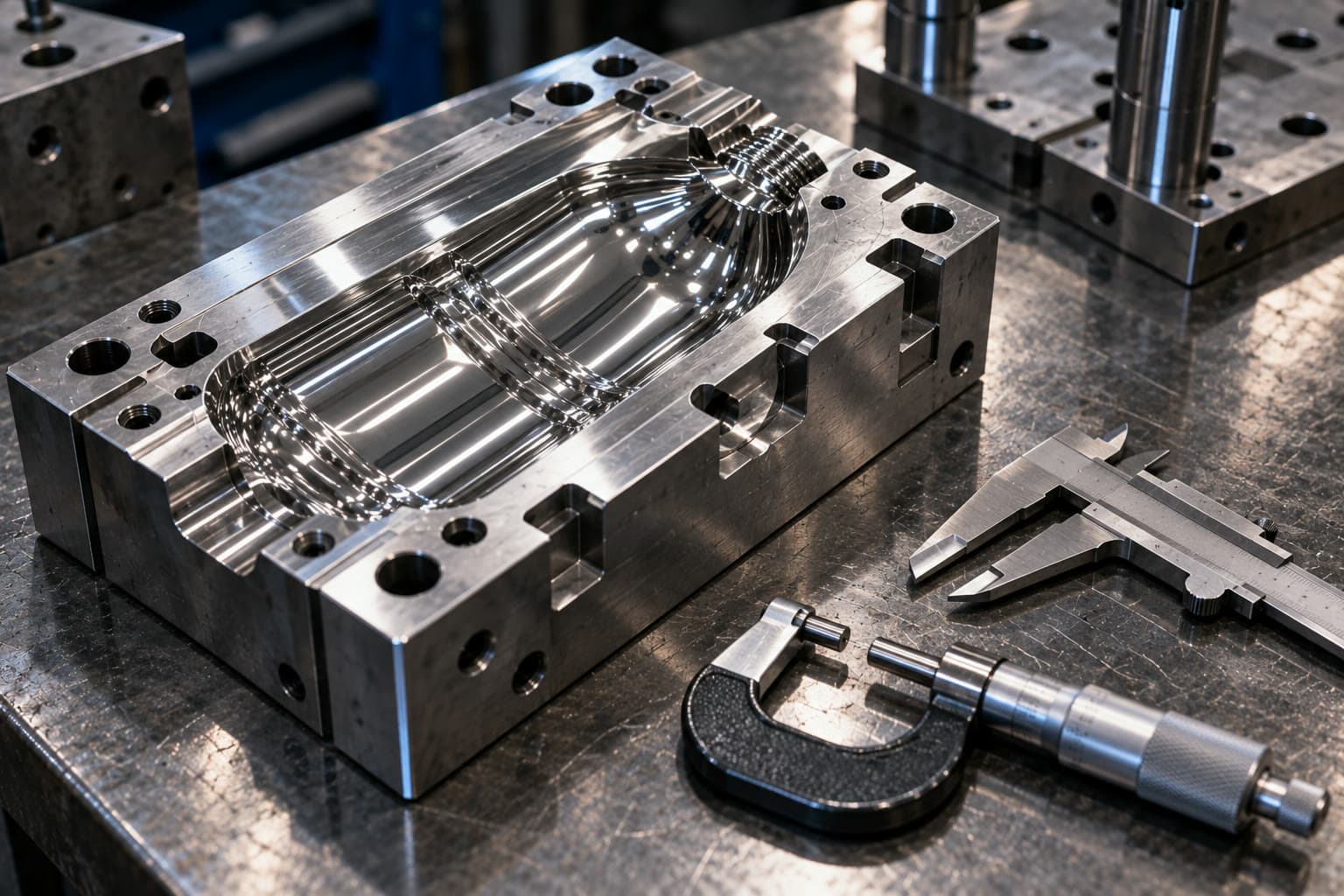
The larger the part, the larger the mold plates and the more machining. Complexity matters even more: thin ribs, deep cavities, side holes, threads. Undercuts need moving units in the mold — slides, lifters or unscrewing mechanisms — and each such unit is a separate piece of work.
Number of cavities
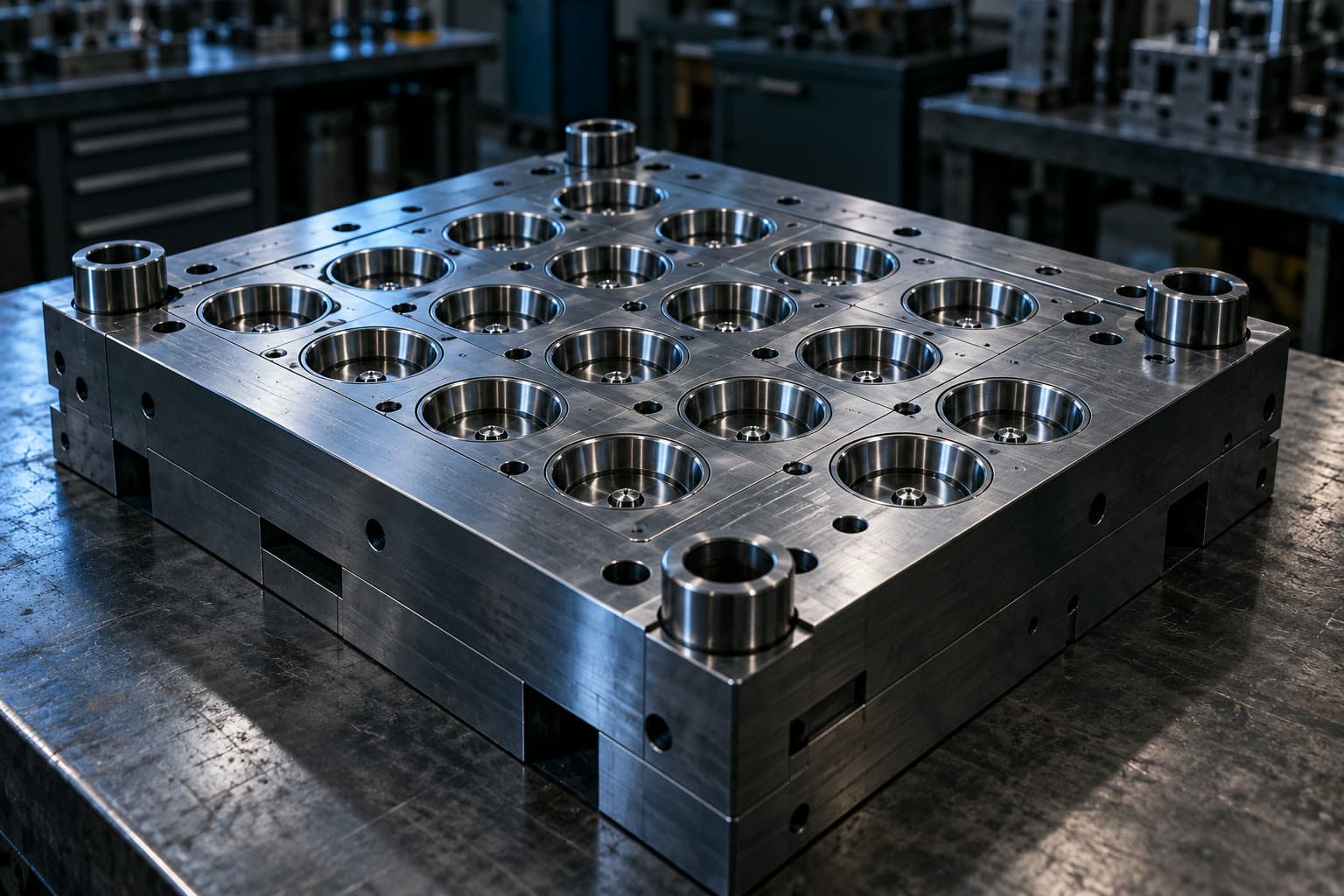
A multi-cavity mold costs more but produces several parts per cycle, so each part is cheaper. A single-cavity mold is often enough for small batches and for testing the part; for large series the number of cavities is calculated from the annual volume.
Steel and tool life
A mold for a long series has to withstand many cycles, so its forming parts are made of hardened tool steels. A simpler steel is possible for short runs — such a mold is cheaper but lasts fewer cycles. That is why it helps to state in the request how many parts the mold is expected to produce.
Runner system
A cold runner mold is simpler and cheaper, but the runner is molded together with the part and has to be separated and reground. A hot runner system costs more, but there is no runner waste and the cycle is often shorter. The choice depends on volume, material and the requirements for the part.
Surface and accuracy
Mirror polishing, texture and tight tolerances add manual work and inspection. If high accuracy is needed in only a few places, it is better to mark just those.
How to lower the cost without losing quality
Most of the savings come from a well-thought-out part design before the mold is made:
- remove undercuts you can do without — fewer moving units;
- even out wall thickness — fewer rejects and a shorter cycle;
- use tight tolerances only where they are really needed;
- choose the number of cavities by the real volume, not with a margin;
- send the 3D model right away — it cuts the time spent on clarifications.
Service: Injection molds