Recycled plastic granules: how they differ from virgin
Published:
Recycled granules are plastic reprocessed from production waste or used products. They cost less than virgin material, but their properties depend on the feedstock and processing, so for each task you need to know the polymer, the melt flow index and the colour. Below is where they fit and what to check before buying.
How recycled granules are made
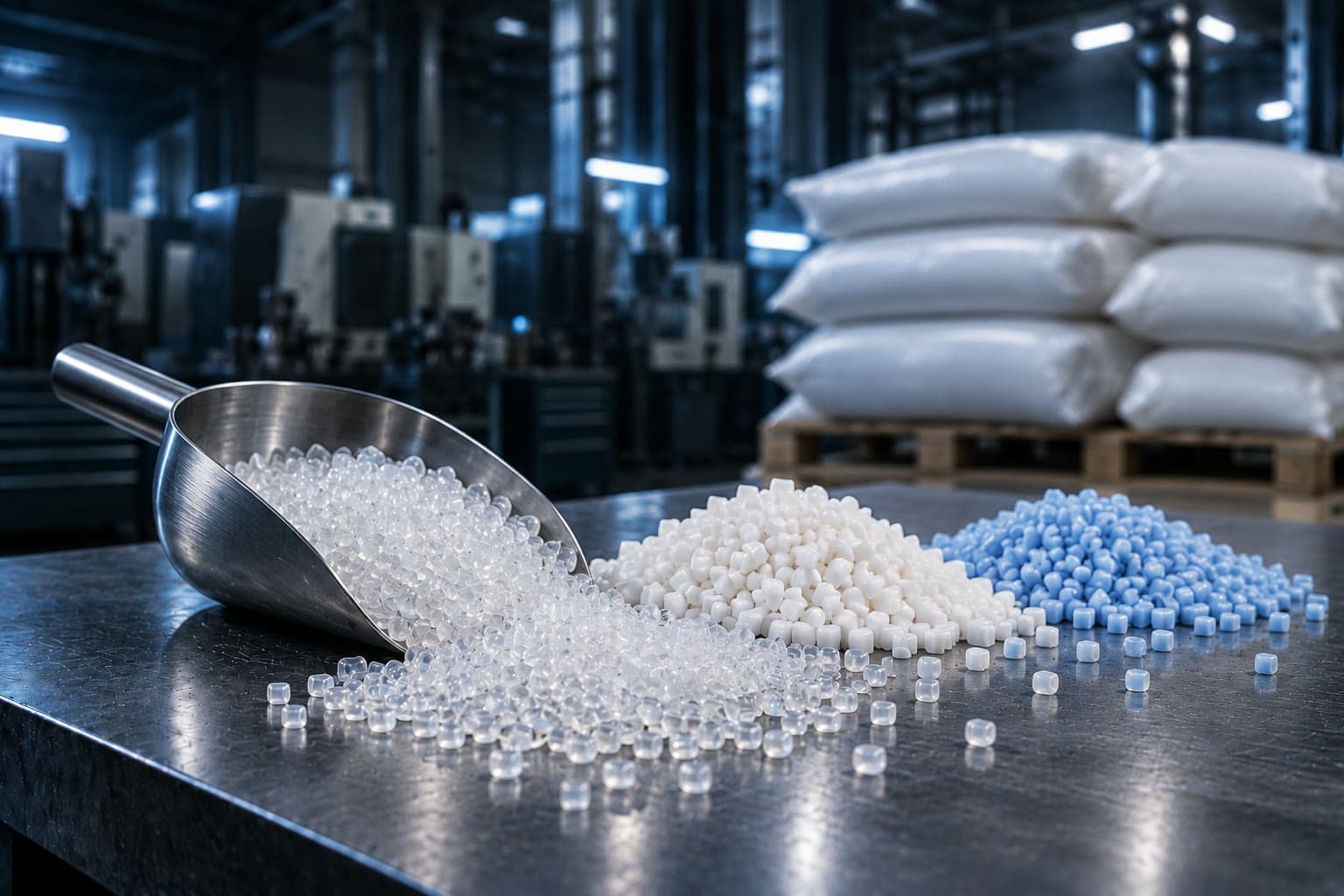
Waste is sorted by polymer, washed if needed and shredded. The shredded material is then melted in an extruder, passed through a filter and cut into granules. The quality of sorting and filtration determines how consistent the granules are from batch to batch.
How they differ from virgin material
Virgin granules are made from petrochemical feedstock, and their properties are set by the grade. Recycled granules may vary slightly between batches, the choice of colours is usually narrower, and mechanical properties are sometimes lower. That is why recycled material is often blended with virgin or chosen for products where these differences do not matter.
Where they are used
Recycled granules suit technical and household products well: crates, containers for non-food liquids, housings, construction products. Packaging and products in contact with food have stricter rules: recycled plastic is allowed there only under special conditions and with the right documents, so check this separately before such use.
What to check before buying
To make the granules behave predictably in your production, ask about:
- the polymer and grade — PP, PE, ABS, PC, PS and so on;
- the melt flow index (MFI) — it has to match your process: injection molding, extrusion or blow molding;
- the colour and whether it is stable from batch to batch;
- moisture — especially for PC and ABS, which absorb water;
- a quality certificate or test results;
- a trial batch before a large order.
Which granules MTECHPLAST produces
We produce recycled granules: polypropylene (PP), ABS, polycarbonate (PC), polyethylene (PE) and polystyrene (PS). Ask about availability and supply terms for each material in the Plastic section.