Mould repair: stages, lead time and what drives the cost
Published:
Mould repair starts with an inspection: the mould is taken apart, cleaned and checked for the cause of the defect, and only then can the scope, price and lead time be named. The cost depends most on the type of damage, how many parts have to be made new and whether drawings exist. Below is how a repair goes and how to cut downtime.
How a repair goes
A repair usually follows this order:
- describing the problem — what is wrong with the parts, when it started, photos or samples of the rejects;
- inspection — the mould is taken apart, cleaned, worn areas are measured and the cause of the defect is found;
- quote — the scope, price and lead time are agreed with the customer;
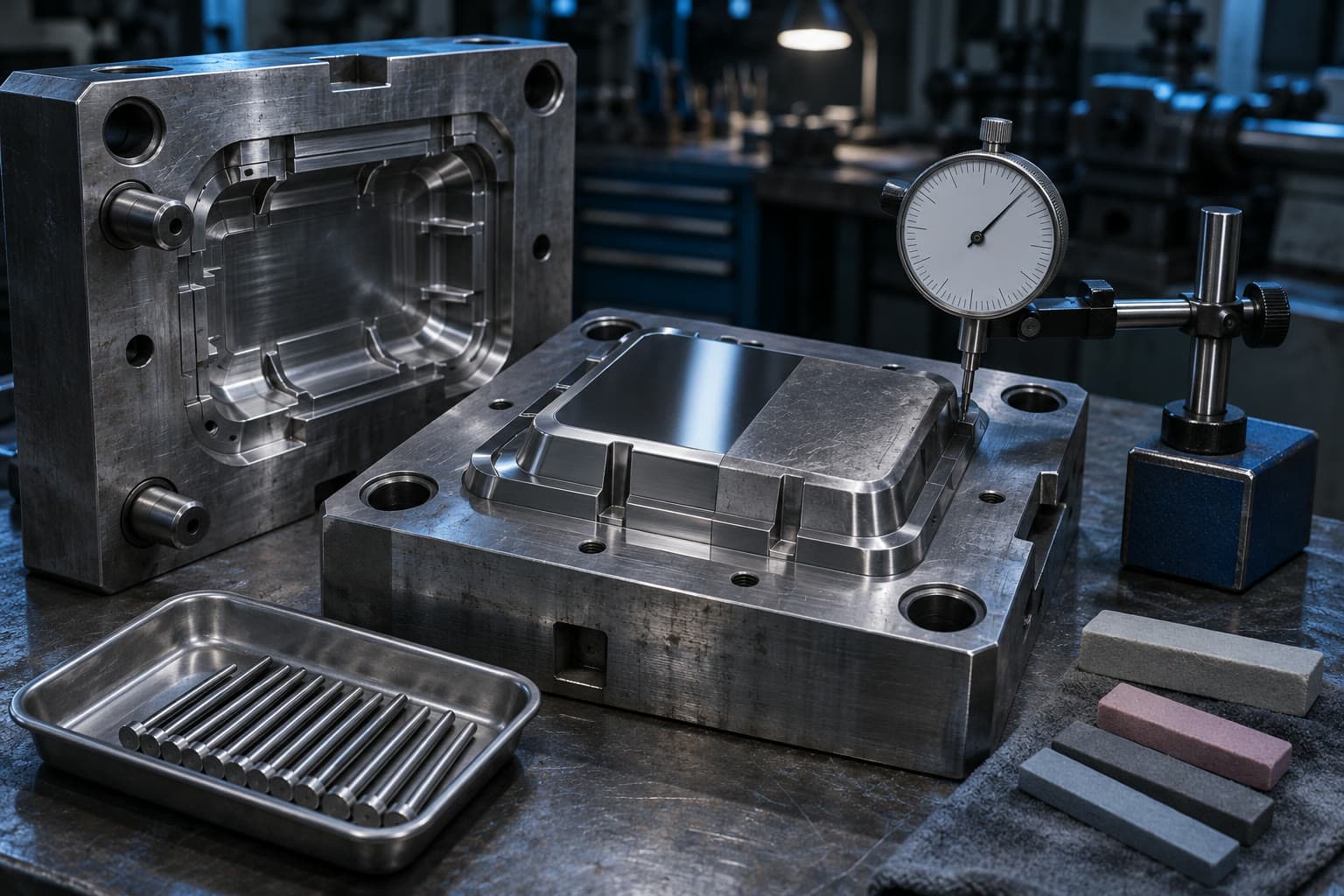
- repair — restoring surfaces, replacing or making worn parts, polishing;
- assembly and testing — moving parts, closing, cooling channels; the final check is trial shots.
What the cost depends on
The price cannot be named without an inspection, because it is made up of several factors:
- the type of damage: a scratch or burr on a surface is easier to restore than a crack or a broken insert;
- how many parts have to be made new — new inserts, cores or ejector pins need machining;
- the steel and its hardness: hardened parts are harder to weld and machine;
- surface requirements: a mirror polish takes longer than a standard one;
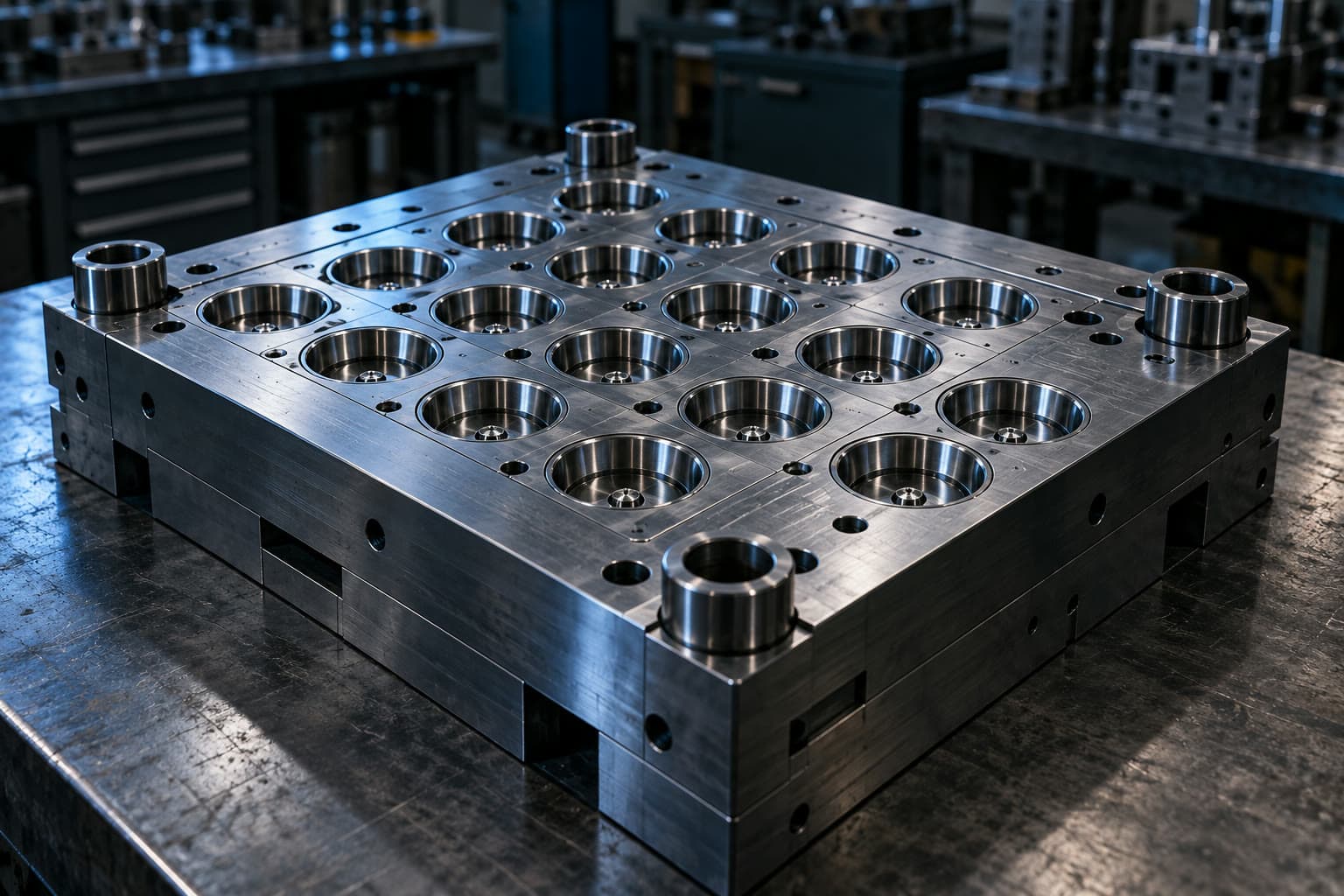
- the number of cavities: in a multi-cavity mould the same defect often has to be fixed in every cavity;
- drawings: without them, the worn part is first measured and modelled.
How long a repair takes
The lead time depends on the same factors. Restoring and polishing a surface is usually faster than making a new insert, which needs a model, machining and sometimes heat treatment. The exact lead time is named after the inspection, together with the price.
Repair or modification
A repair brings the mould back to its original state. A modification changes it for a new version of the part: inserts are replaced, cores changed, gate positions moved. The two are often combined so the mould is not out of production twice.
How to cut downtime
A repair goes faster if you:
- send a few rejected parts with the mould and, if you have it, the last good part;
- add drawings or a 3D model of the mould or the part — this saves time on measuring;
- tell us what has been repaired before and how many cycles the mould has run;
- keep spares of the parts that wear fastest — for example, ejector pins and guide bushes.
Mould repair at MTECHPLAST
We restore, polish and modify mould components, and if there is no documentation, we make the 3D model and drawings of the worn part ourselves. Describe the task and add photos of the rejects — we will give a preliminary estimate of the scope, and the exact price and lead time after inspecting the mould.
Service: Mould repair and modification