Plastic injection molding: how it works
Published:
Injection molding is a way of making plastic parts: molten plastic is injected under pressure into a metal mold, cooled, and the finished part is ejected. The cycle repeats automatically, which makes the method cost-effective for series production. Below is how the cycle runs, what the mold consists of and what the quality depends on.
How the molding cycle runs
Parts are molded on an injection molding machine. One cycle has five steps:
- clamping — the mold halves close tightly so that the melt does not leak along the parting line;
- injection — the screw feeds molten plastic into the mold through the runner system and fills the cavity;
- holding — pressure is kept while the plastic solidifies, which compensates for shrinkage and reduces sink marks;
- cooling — the part solidifies in the mold while cooling channels carry the heat away;
- opening and ejection — the mold opens, ejector pins push the part off, and the cycle starts again.
What an injection mold consists of
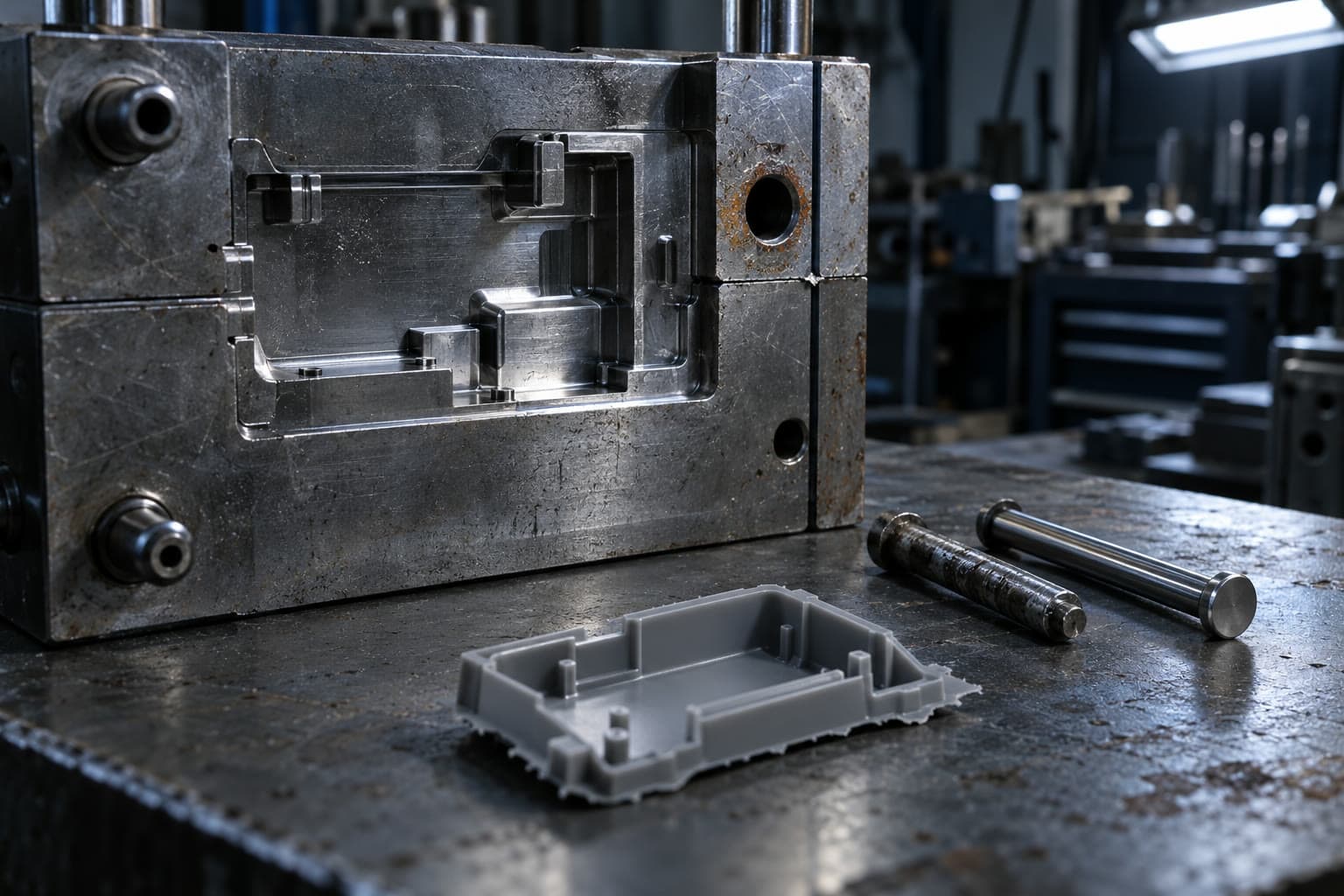
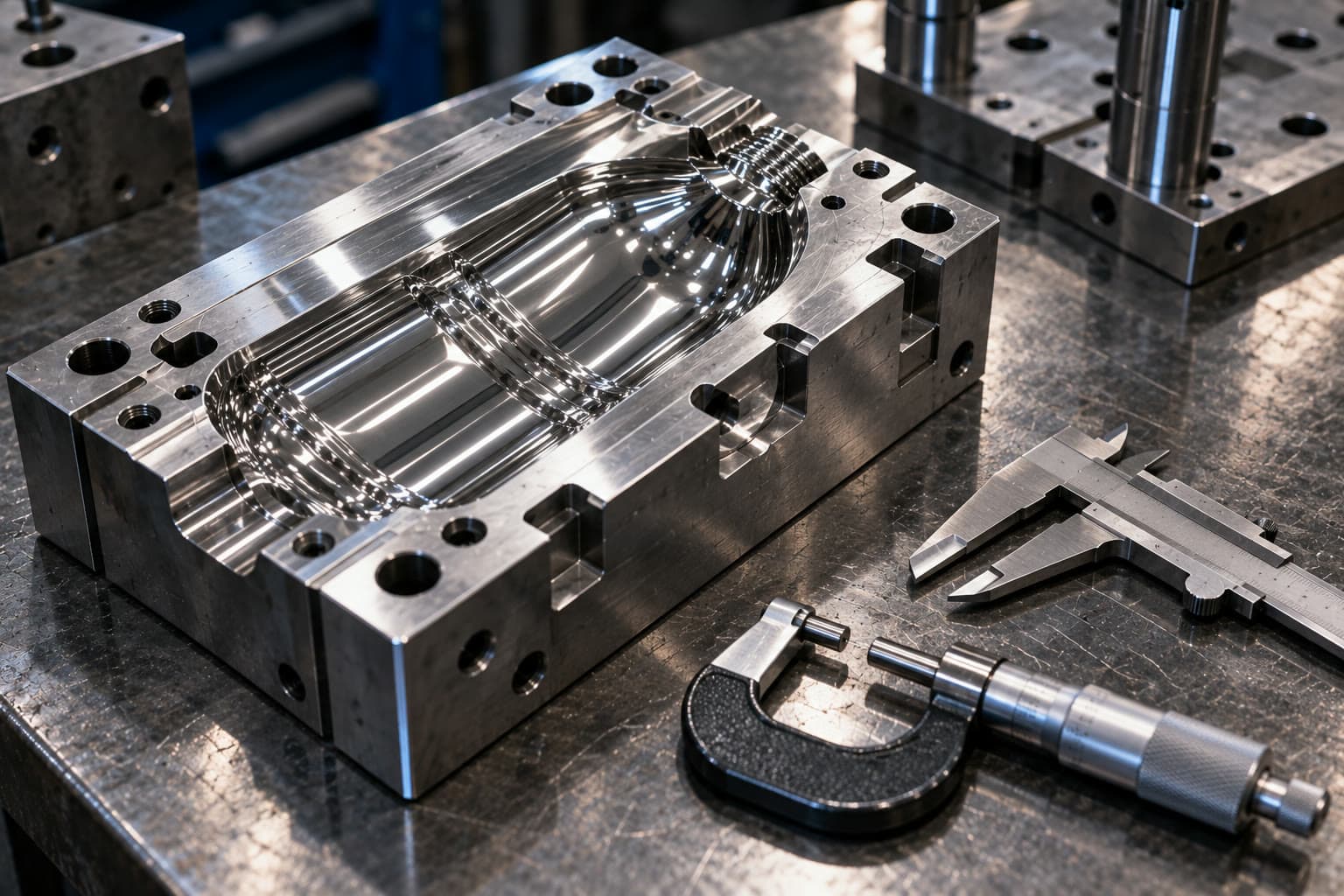
The basis of the mold is two halves: the stationary one on the injection side and the moving one on the ejection side. The hollow that shapes the outer surface of the part is called the cavity, and the part that shapes the inner surface is the core.
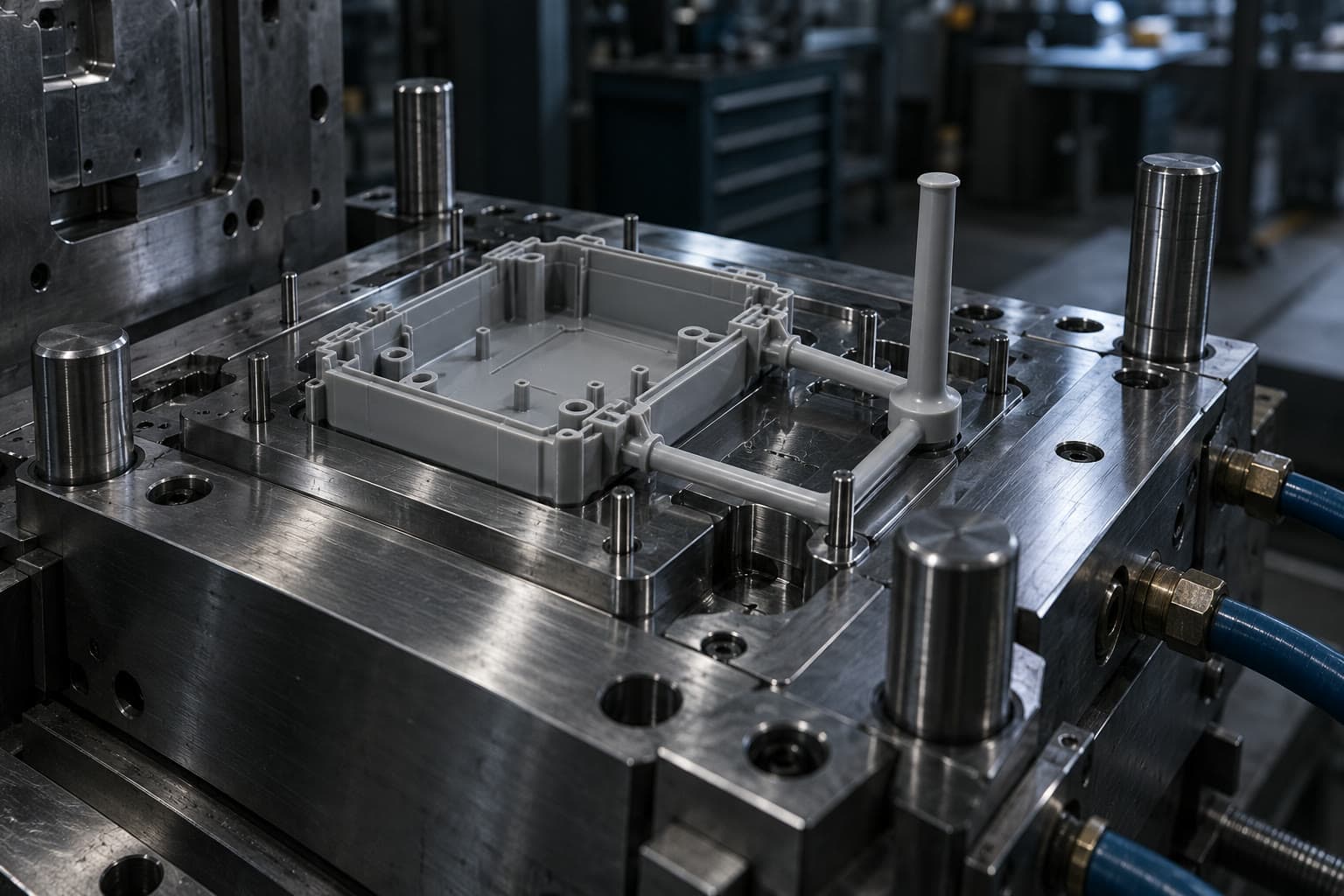
Besides the forming parts, the mold has a runner system that carries plastic to the cavities, cooling channels, an ejection system, guide pillars and bushings. If the part has undercuts — side holes, snap fits, threads — the mold gets moving units: slides, angled lifters or unscrewing mechanisms.
Cold runner and hot runner
In a cold runner mold the runner solidifies together with the part and leaves the mold as a separate piece that is cut off and reprocessed. In a hot runner mold the plastic stays molten right up to the cavity, so there is no runner waste and the cycle is often shorter.
A hot runner costs more, so it is chosen for large volumes and where the look of the gate area matters.
Common defects and their causes
Most defects come from the molding settings, the part design or the condition of the mold:
- short shot — the cavity is not filled completely: not enough pressure, temperature or venting;
- flash — a thin film of plastic along the parting line: worn shut-off surfaces or too much pressure;
- sink marks — dents over thick sections: uneven wall thickness, holding time too short;
- warpage — the part distorts after ejection: uneven cooling and internal stress;
- weld lines — marks where melt fronts meet: depend on gate position and temperature;
- silver streaks and bubbles — moisture in the material: the granules were not dried before molding.
What part quality depends on
Quality is built in at three levels. First, the part design: even wall thickness, draft angles, radii. Second, the mold: well-placed gates, even cooling, venting and accurate shut-off. Third, the molding settings and the material: temperature, pressure, holding and cooling time, granule preparation.
That is why it pays to discuss the part design with the mold maker before the mold is built: small changes at this stage cost far less than reworking a finished mold.
Service: Injection molds