Skip to content
MTECHPLAST

Plastic waste: how to sell molding rejects

Published:

Molding rejects, runners and other production plastic waste are bought by recyclers who turn them into granules. Clean waste of one plastic type and one colour fetches the best price. Below is what to prepare to sell your waste for more.
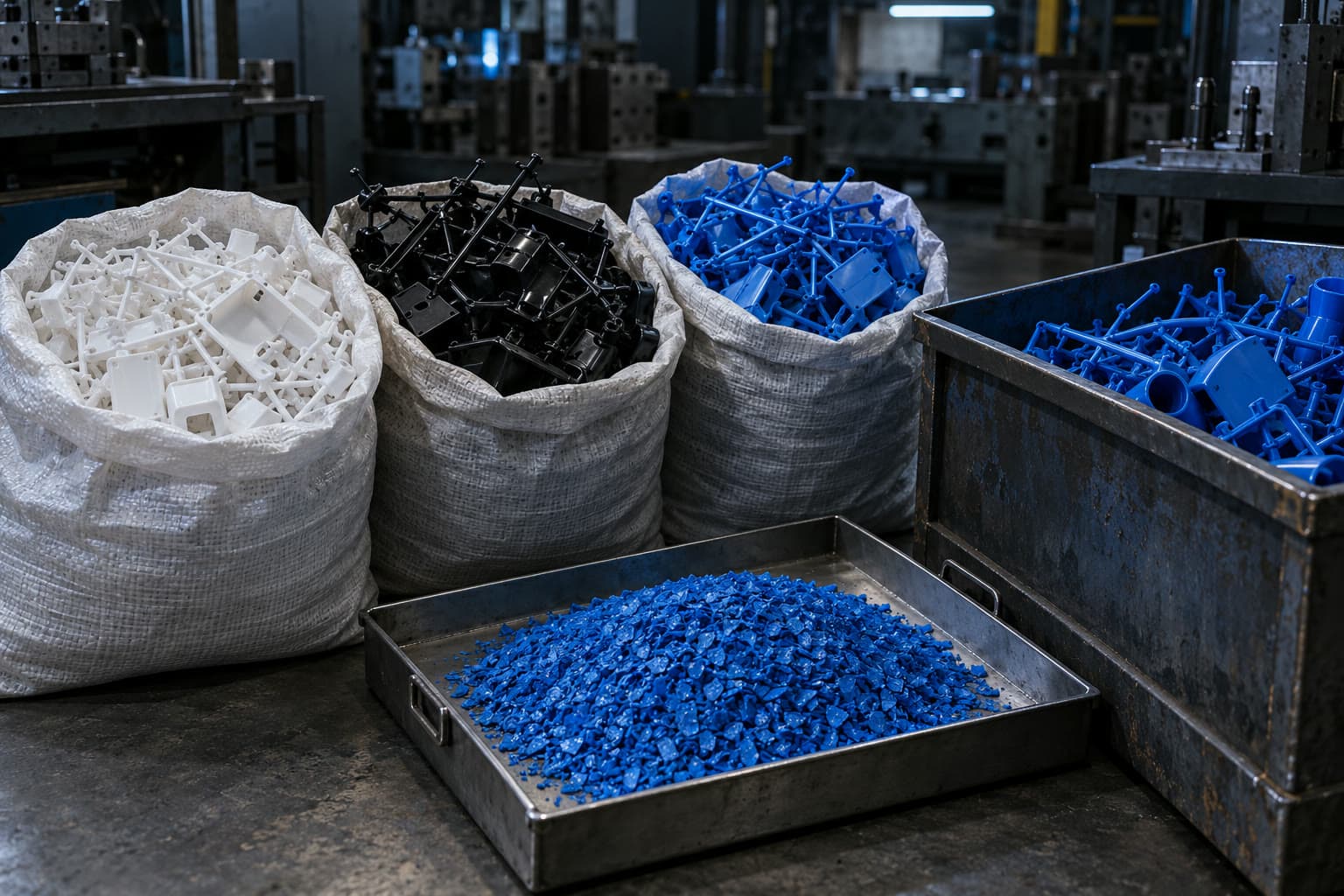
Molding rejects and runners sorted by colour in sacks, blue shredded plastic on a steel tray

What waste recyclers buy

Production waste is the most interesting for a recycler — it is clean and its composition is known:

  • rejected injection-molded parts;
  • runners — plastic that has set in the runner system of the mold;
  • plastic left after setting up a molding run or changing colour;
  • trimmings and waste from extrusion and blow molding.

Why sorting matters

Different plastics do not mix well: an admixture of another polymer worsens the properties of the granules. That is why rejects are sorted by plastic type — PP apart from PE, ABS apart from PS and so on.

The more uniform the colour of a batch, the more uses it has: light-coloured material can become light or dark granules, dark material only dark ones.

How to prepare a batch

To get your waste assessed quickly and sold for more:

  • collect the waste by plastic type and, if possible, by colour;
  • remove metal inserts, labels, paper and debris;
  • keep the waste dry and clean, free of oil and soil;
  • label the sacks: plastic type, grade if known, approximate weight;
  • take a few photos of the batch — a recycler can assess it quickly from them.

What the price depends on

The price depends on the plastic type, the purity and uniformity of the batch, the colour, the volume and how regular the supply is. Mixed, dirty or wet waste is worth less, because it has to be sorted, washed and dried. Regular supplies of the same material are worth more to a recycler than one-off batches.

How MTECHPLAST buys waste

We make recycled granules from molding rejects and buy plastic waste. Tell us what plastic it is, how much there is and where it is, and add photos — the terms are agreed individually.
Granule types and availability

Questions

Frequently asked questions

Do rejects have to be shredded before selling?

Not necessarily. A recycler usually shreds large parts and runners itself; what matters is that the waste is sorted and clean.

Which plastic waste is worth the most?

Clean production waste of one plastic type and one colour, with no admixtures: it can be recycled without extra sorting and washing.

How do I find out the price for my waste?

Send the plastic type, the approximate volume and photos of the batch. The price is given after the waste has been assessed.

Have plastic waste?

MTECHPLAST is a producer of recycled plastic granules: polypropylene, ABS, polycarbonate, polyethylene and polystyrene. We produce 5 to 40 tonnes a month, depending on your request. Ask about availability and supply terms for each material.

Granule types and availability

Other articles

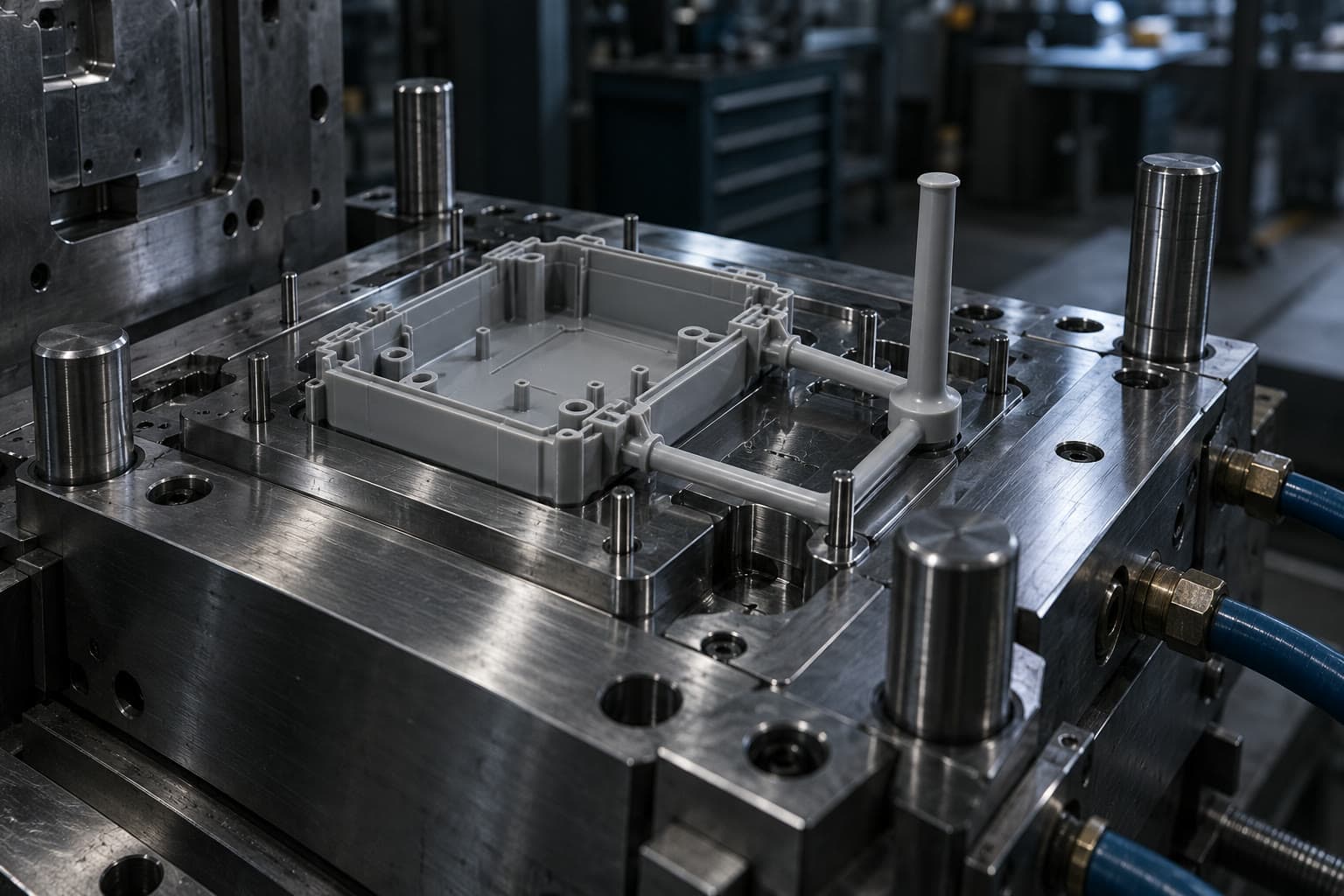
  • Open injection mold with a molded grey housing and its runner still on the core

    Plastic injection molding: how it works

    Injection molding is a way of making plastic parts: molten plastic is injected under pressure into a metal mold, cooled, and the finished part is ejected. The cycle repeats automatically, which makes the method cost-effective for series production. Below is how the cycle runs, what the mold consists of and what the quality depends on.

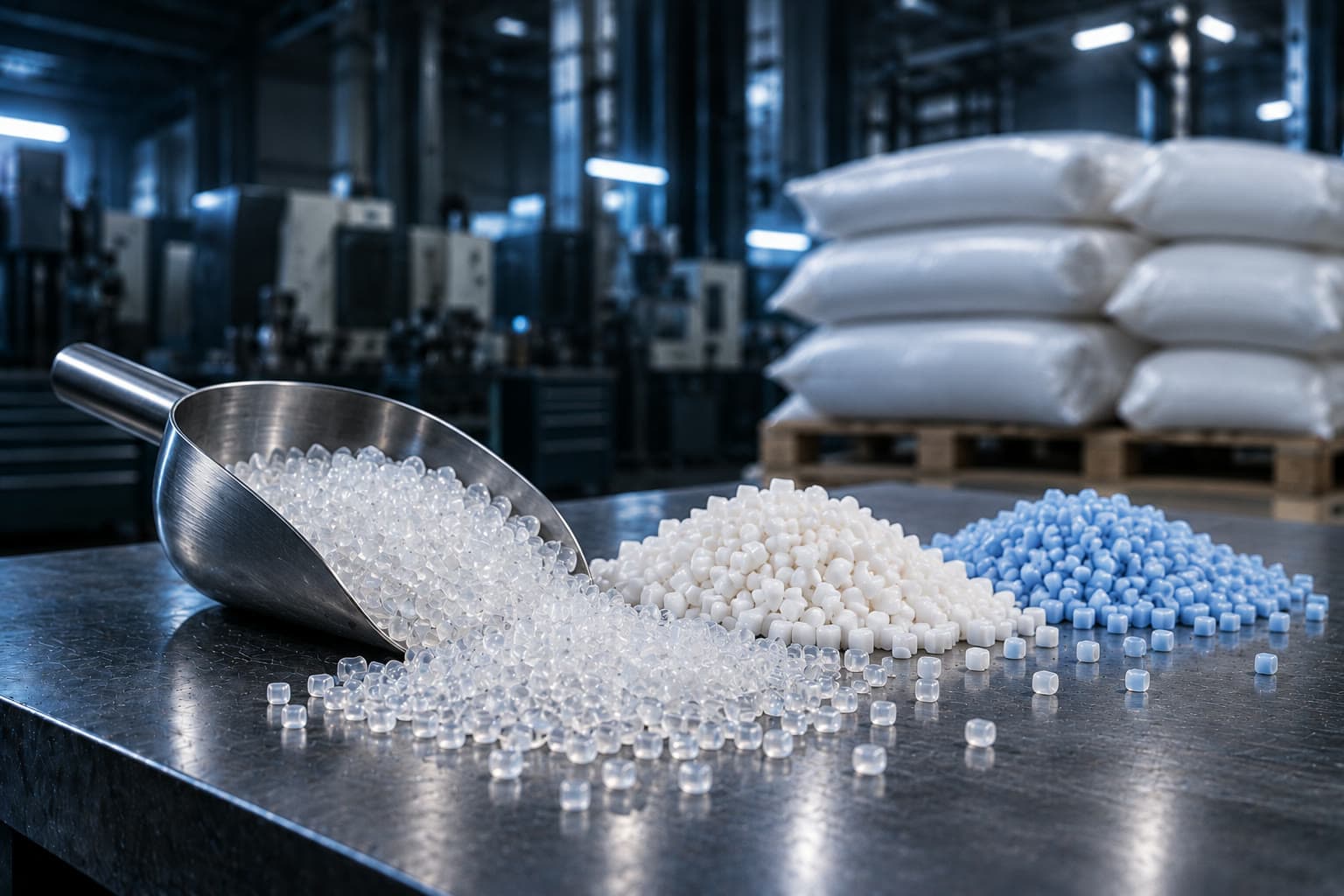
  • Clear, white and blue plastic granules on a steel table, sacks on a pallet behind

    Recycled plastic granules: how they differ from virgin

    Recycled granules are plastic reprocessed from production waste or used products. They cost less than virgin material, but their properties depend on the feedstock and processing, so for each task you need to know the polymer, the melt flow index and the colour. Below is where they fit and what to check before buying.

  • Stackable, nestable and foldable grey crates in a warehouse next to a Euro pallet

    Plastic crates for fruit and vegetables: how to choose

    Fruit and vegetables usually go into 60 × 40 or 40 × 30 cm crates, which fit the Euro pallet exactly. The type depends on how the crates come back: stackable ones for constant use in one place, nestable and foldable ones when empty crates have to travel back. Below is how the types, walls and materials differ and what to put in your order.

Send a drawing