Mold repair: signs of wear and what to do
Published:
A mold wears gradually, and the first signs show up on the parts: flash, scratches, marks on the surface, dimensional drift, sticking. If the repair is done in time, it is usually enough to restore individual surfaces and replace worn components. Below is what to watch for and what to do once a problem appears.
Signs that a mold needs repair
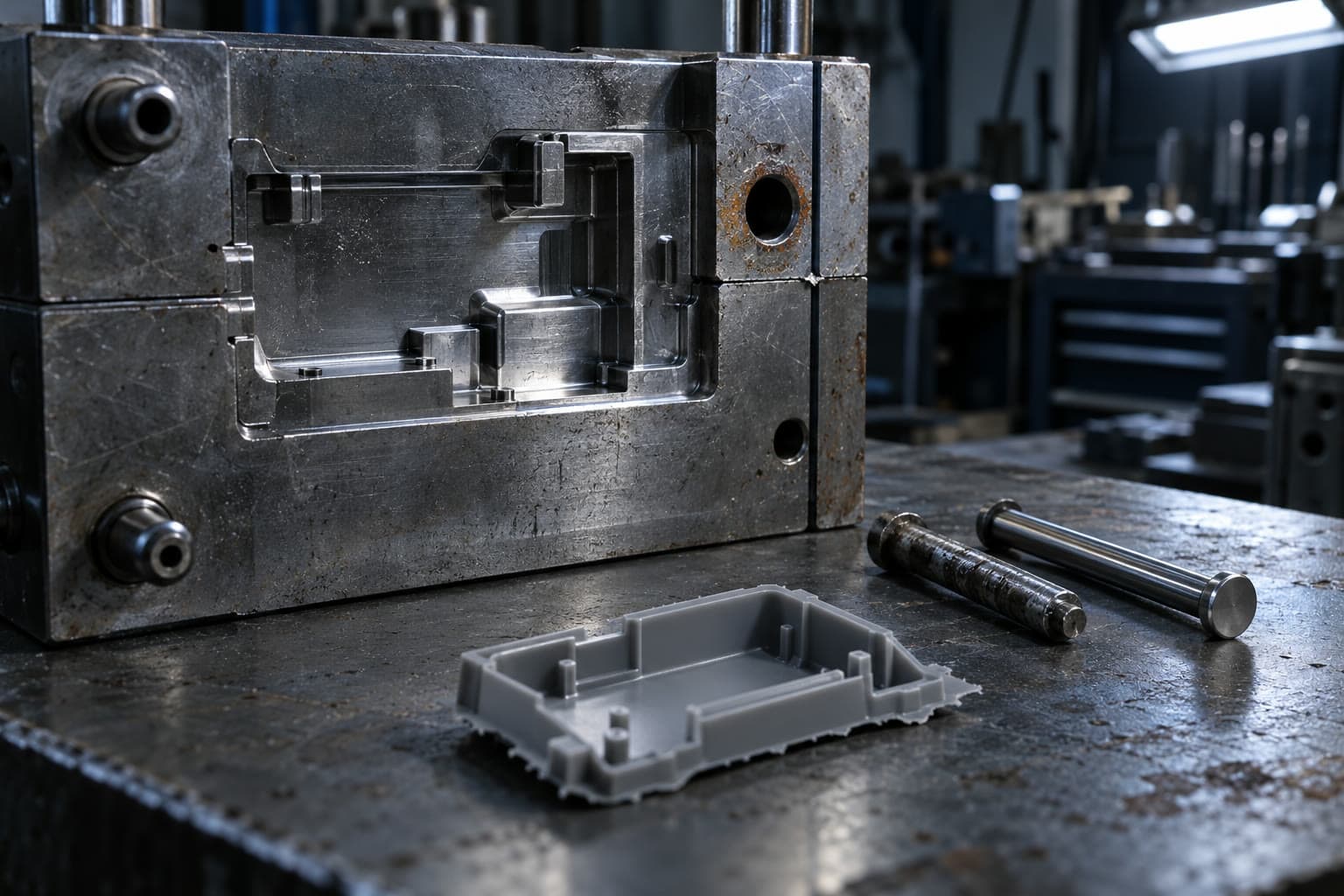
It is time to inspect the mold if you see any of the following on the parts or in production:
- flash along the parting line or around ejector pins — the shut-off surfaces are worn or damaged;
- scratches, burrs and dull spots where the surface used to be smooth;
- the part is hard to eject, sticks or deforms during ejection;
- part dimensions change from batch to batch;
- the cycle gets longer because the mold cools worse, or the cooling channels leak;
- ejector pins or moving units stick, and the guides show galling.
Why molds wear
The causes usually act together: friction of moving parts, abrasive fillers in the plastic, corrosion from moisture and gases released during molding, scale and dirt in the cooling channels, and impacts on closing if a part or runner is left in the mold. Wear speeds up if the mold is not cleaned and lubricated between batches.
What to do once a problem appears
To make the repair quick and avoid doing it twice:
- stop production if the defect is getting worse: flash and galling quickly damage the shut-off surfaces further;
- keep a few defective parts — they show exactly where the problem is;
- write down when the defect appeared and what changed: material, settings, raw material batch;
- hand the mold over for inspection together with the parts and, if available, the drawings.
What a repair includes
The scope of work is set after inspection. It usually covers cleaning and checking the mold, restoring damaged surfaces, polishing the forming surfaces, replacing worn ejector pins, guide pillars and bushings, repairing moving units and flushing the cooling channels. If the part has changed, the mold can be modified for the new version.
How to extend mold life
Regular maintenance costs less than repair:
- clean the shut-off surfaces and vents after every batch;
- lubricate the guides and moving units;
- flush scale out of the cooling channels;
- store the mold dry, with an anti-corrosion coating;
- keep a record of how many cycles the mold has run and what was repaired.
Service: Mold repair and modification