Recycled polyethylene: HDPE vs LDPE and where each is used
Published:
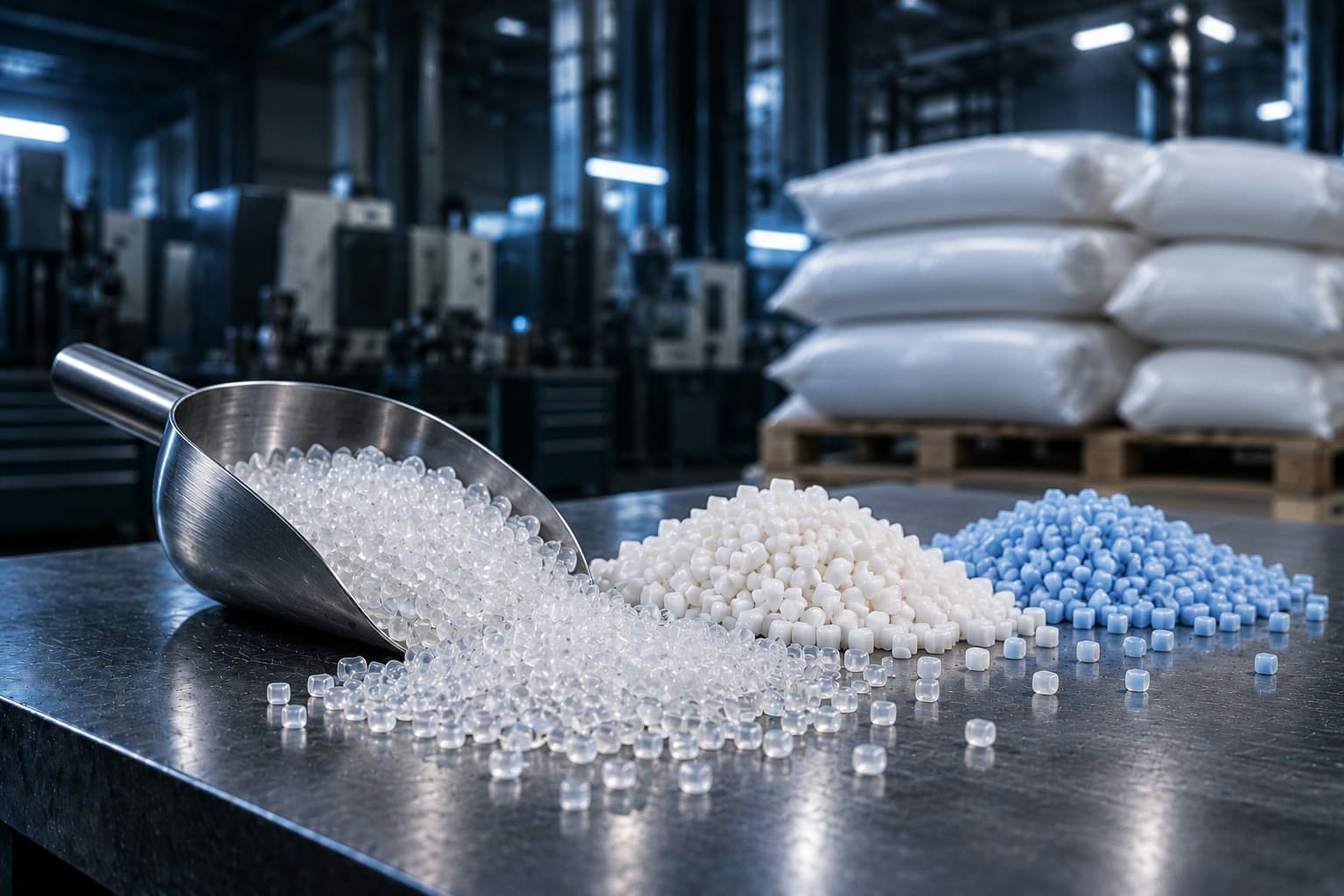
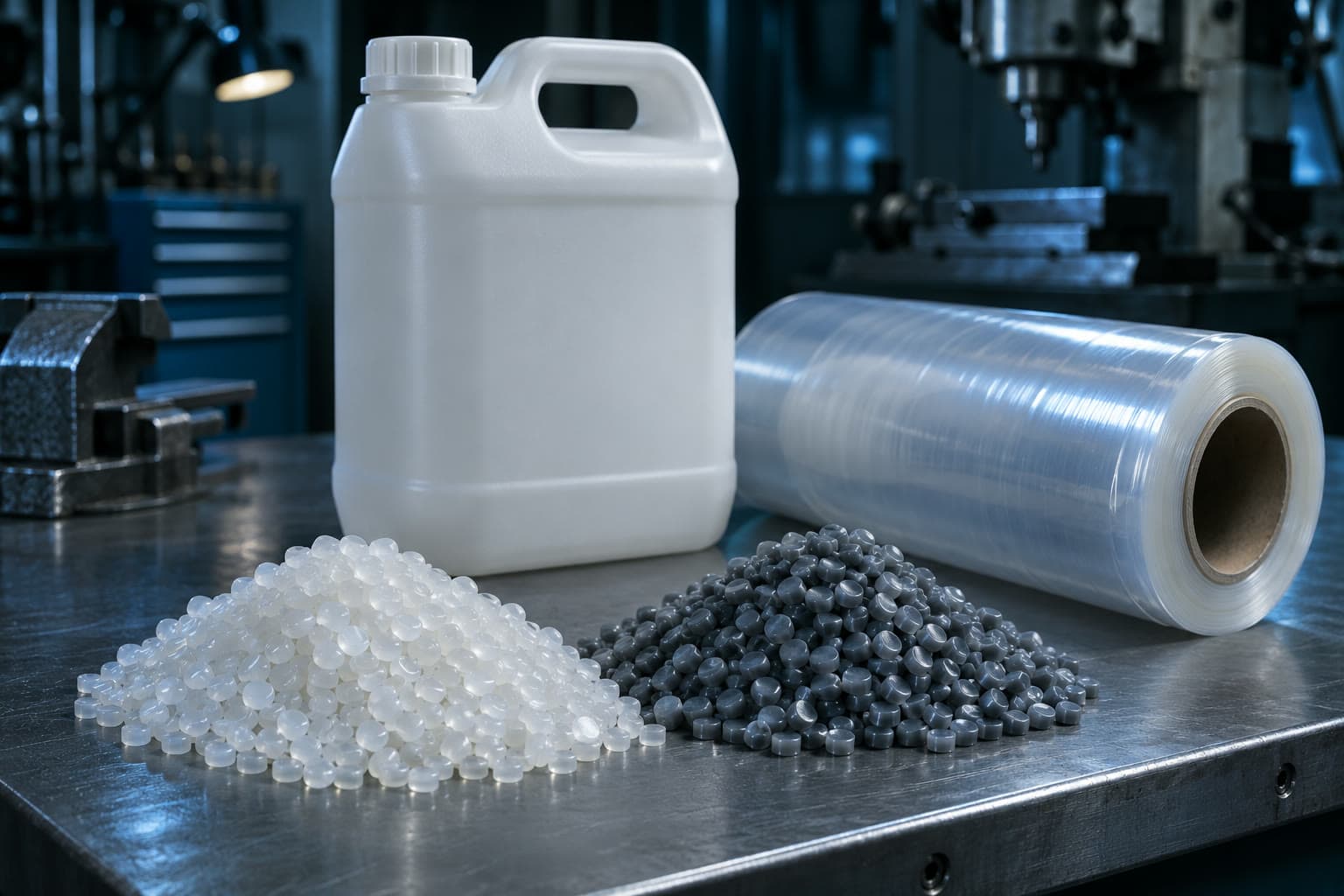
HDPE and LDPE are two different polyethylenes. HDPE (high-density polyethylene) is rigid and dense — canisters, crates, caps and pipes are made from it. LDPE (low-density polyethylene) is soft and flexible — mostly film and bags. Recycled granules are chosen the same way: HDPE for rigid products, LDPE for film and soft parts, with the melt flow index matched to the process.
How HDPE differs from LDPE
The difference lies in the structure of the molecules: HDPE chains have almost no branches and pack tightly, while LDPE chains are heavily branched. In Ukraine and other post-Soviet markets the two are often named after the production pressure, which can confuse: HDPE is called low-pressure polyethylene, LDPE high-pressure.
In practice this means:
- HDPE — a density of about 0.94–0.97 g/cm³, rigid, strong in tension, chemically resistant; marked 2 or PE-HD;
- LDPE — a density of about 0.91–0.93 g/cm³, soft, elastic, clearer in thin film; marked 4 or PE-LD.
What recycled HDPE is used for
Canisters and bottles for technical fluids and household chemicals, crates, buckets, caps, household goods, non-pressure and cable pipes. HDPE blow moulds well, so it is often chosen for canisters, and it is also injection moulded and extruded.
What recycled LDPE is used for
Mostly film: bin bags, technical and construction film. Soft parts are moulded from it too — for example, lids that fit tightly onto a container. Used film, including stretch wrap from warehouses, is a common feedstock for recycled LDPE.
Can HDPE and LDPE be blended
Both are polyethylene, and a blend processes together. But the blend has intermediate properties: an HDPE part becomes softer, LDPE film becomes stiffer. For consistent products it is better to buy granules of one type, and if you blend, keep a fixed ratio chosen with trial shots.
What to ask the supplier
To make sure the granules suit your production, ask about:
- the type of polyethylene — HDPE or LDPE, and for HDPE whether it is for injection moulding, blow moulding or extrusion;
- the melt flow index (MFI): blow moulding and pipes need a low flow, injection moulding a higher one;
- the colour and whether it stays the same from batch to batch;
- whether there is polypropylene or other plastics in it;
- how clean the feedstock is: granules from poorly washed waste give off a smell and leave inclusions in the part.
Recycled polyethylene from MTECHPLAST
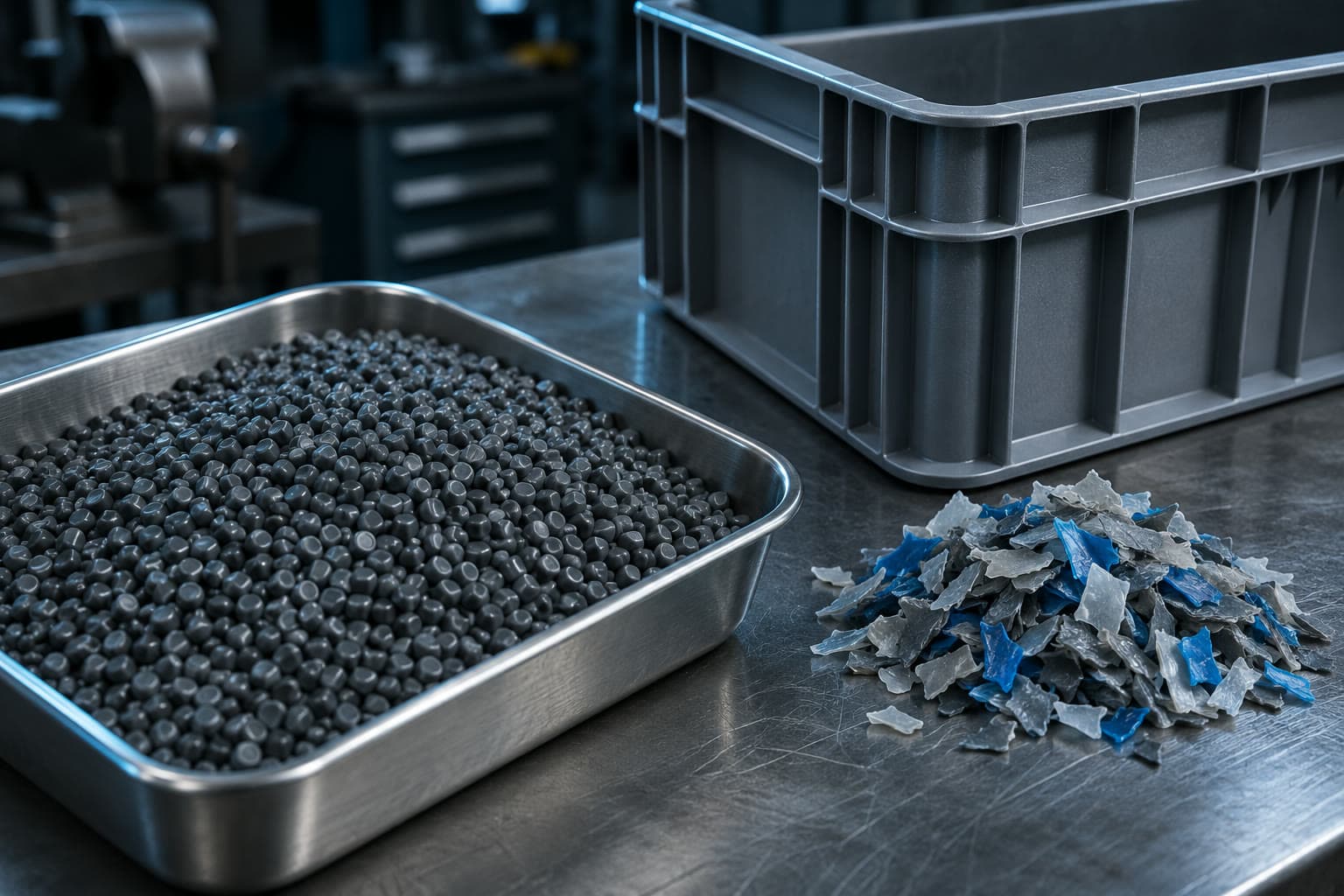
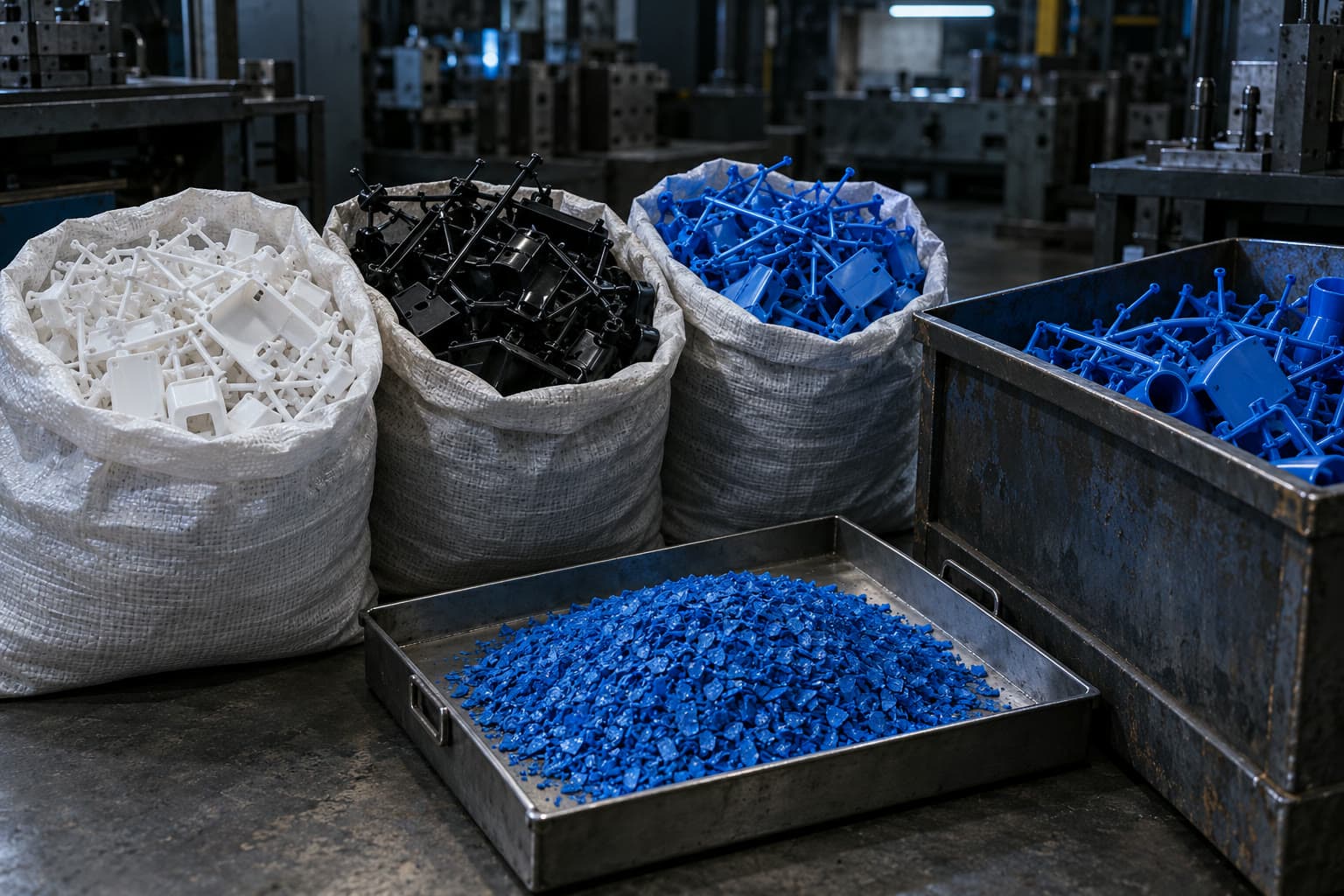
We produce recycled polyethylene granules from injection moulding rejects that we buy and recycle. Ask which polyethylene is available now and in what volume for your request in the Plastic section: in total we produce 5 to 40 tonnes of granules a month. You can also order a blow mould for canisters or bottles from us.