Recycled polypropylene: properties, uses and how to choose granules
Published:
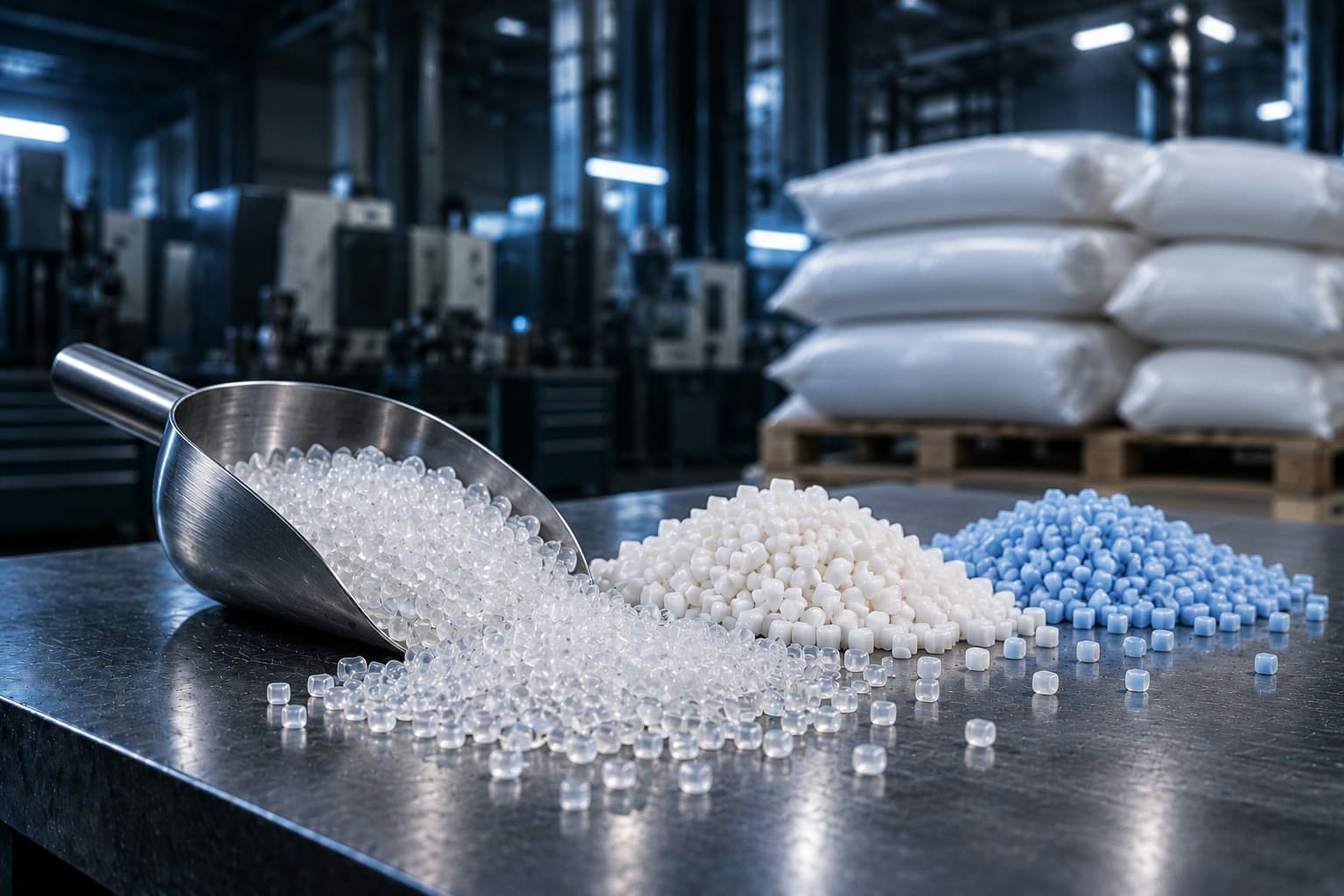
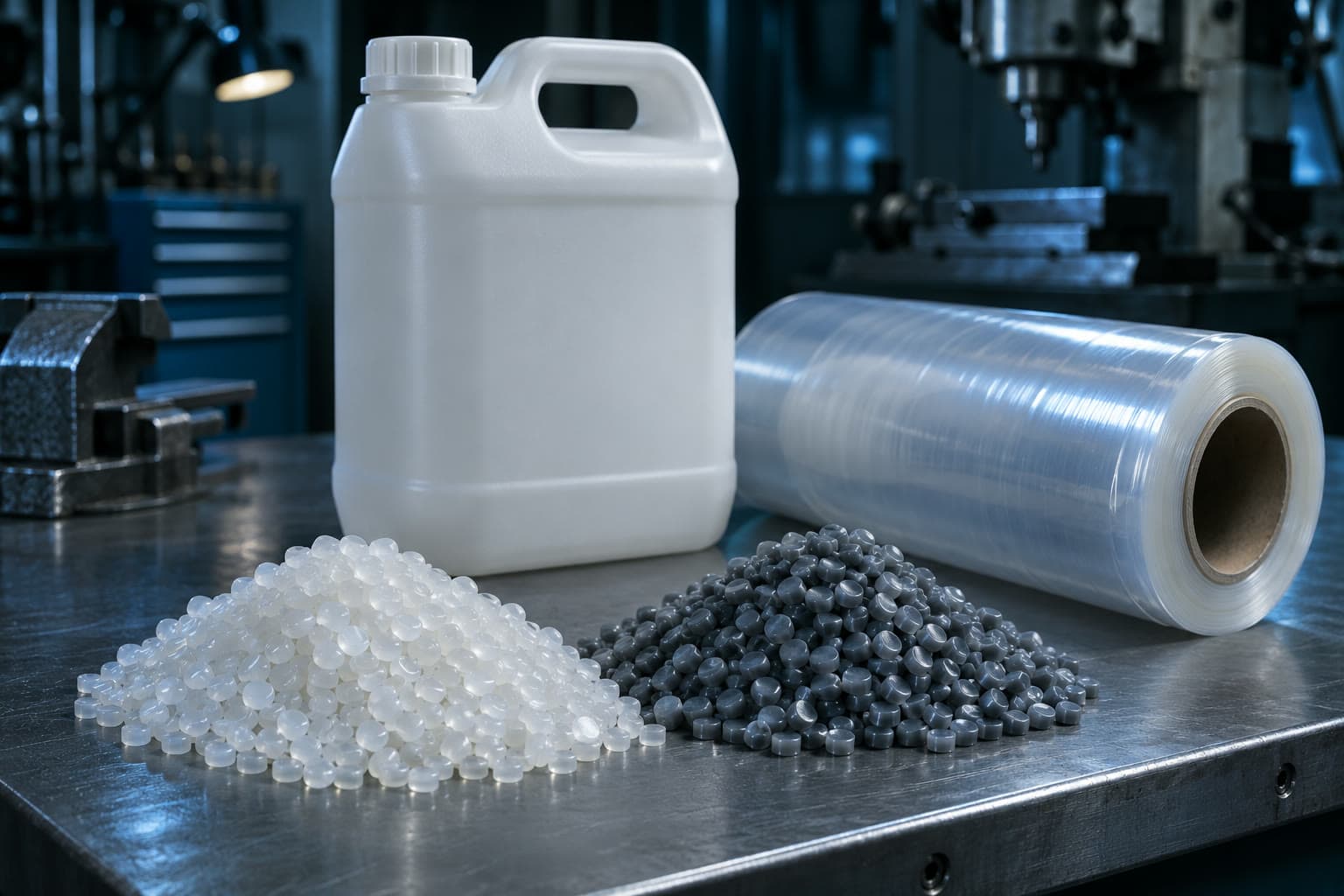
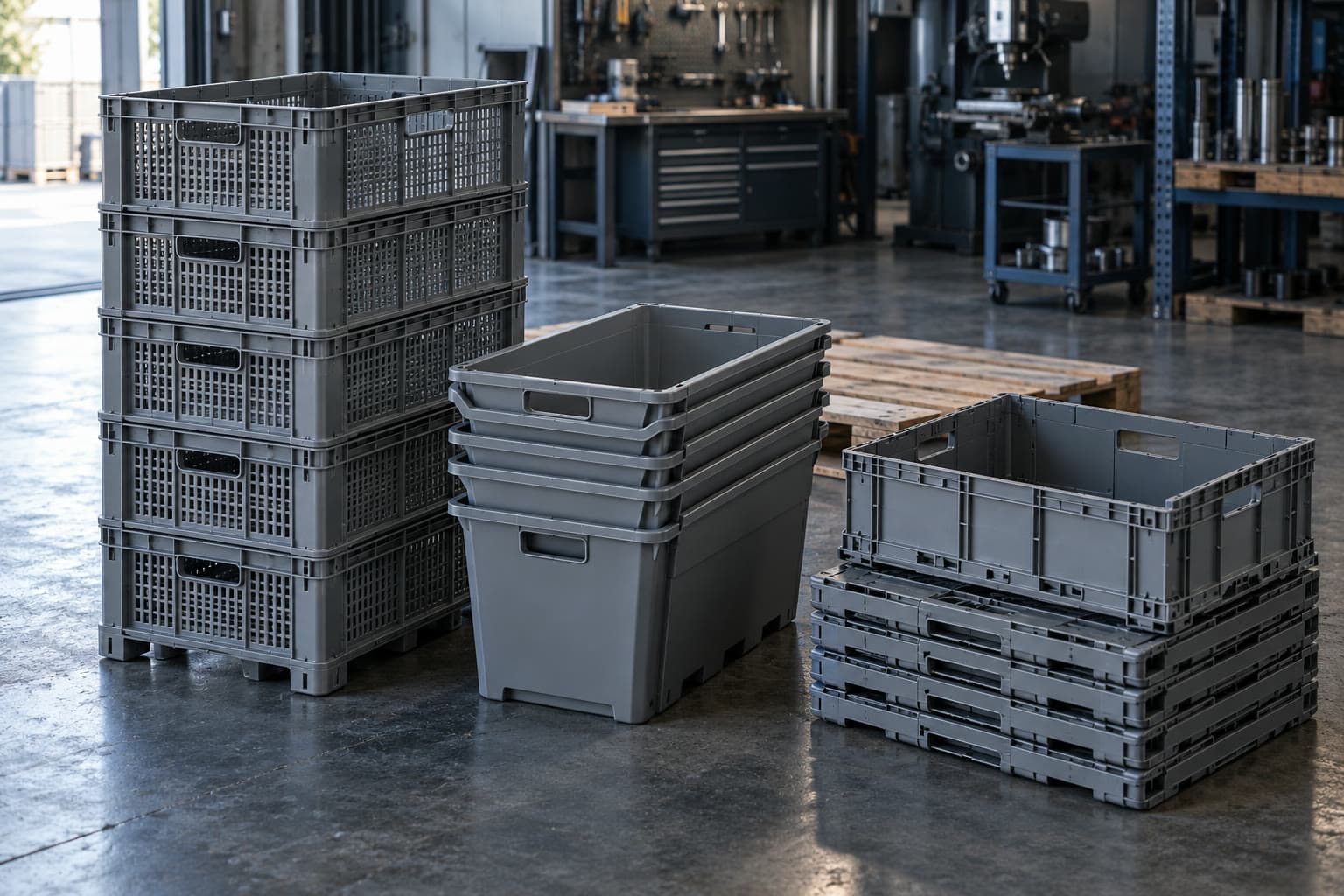
Recycled polypropylene (PP) is granulate reprocessed from polypropylene waste: injection moulding rejects, runners, used crates and containers. It is light, chemically resistant and cheaper than virgin material, so it goes into crates, buckets, housings and technical parts. Before buying, you need to know the melt flow index, the colour and whether the granules contain other plastics.
What recycled polypropylene is
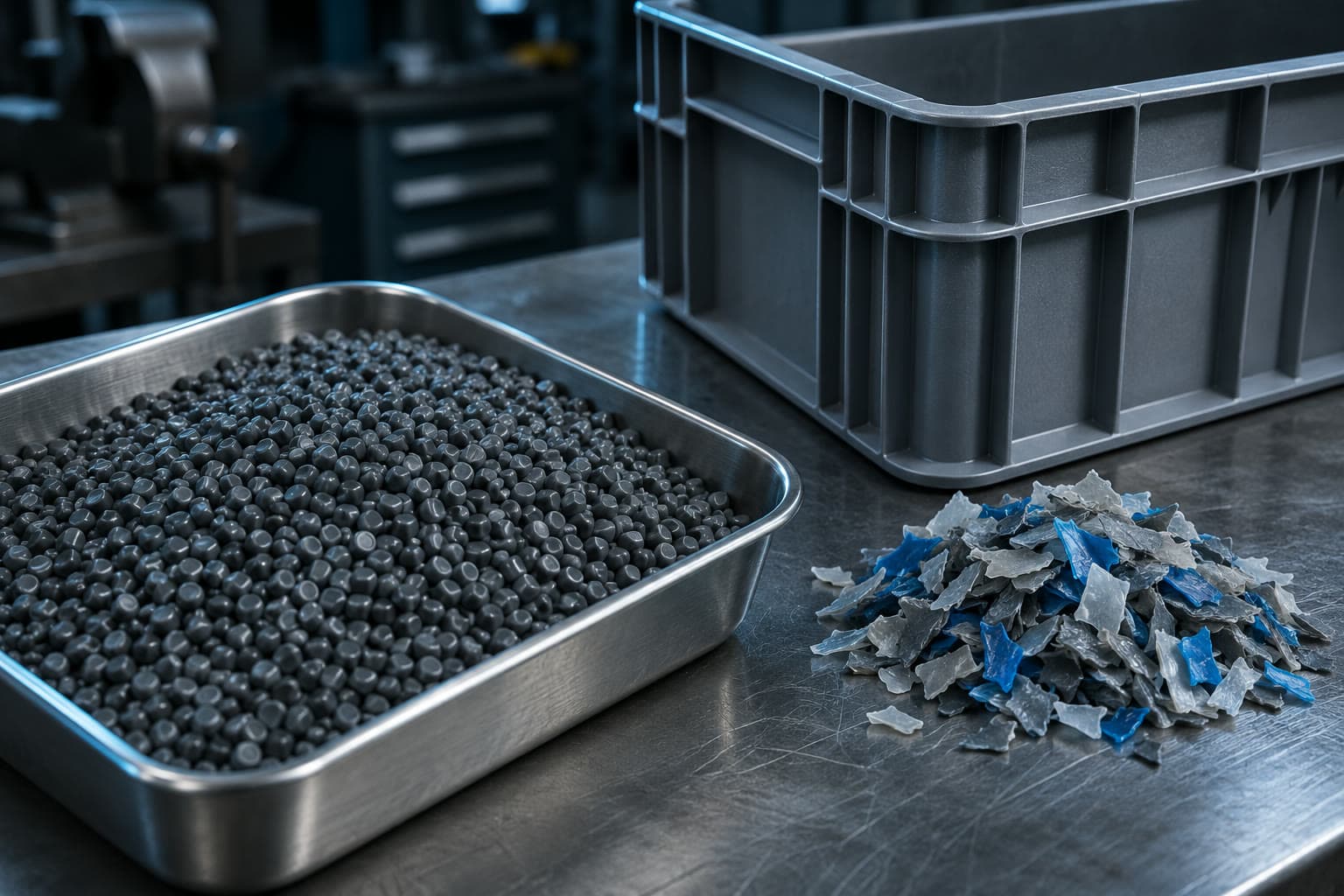
Polypropylene is one of the most common plastics: crates, caps, buckets, housings and containers are made from it. Production waste — rejects, runners, trimmings — and used products are sorted, shredded, melted in an extruder, filtered and cut into granules. The result is recycled PP that can be moulded, extruded or blended with virgin material again.
Polypropylene products carry the number 5 in a triangle or the letters PP, and waste is sorted by this marking.
Granules or regrind
Waste is also bought and sold simply shredded, without remelting. Regrind is cheaper, but its flakes vary in size and shape, it is more likely to contain impurities and it feeds into the machine unevenly. Granules have been melted and filtered: they are uniform and behave more consistently in processing. That is why granules are usually chosen for injection moulding and extrusion.
Properties of recycled PP
Recycled polypropylene keeps the main properties of virgin material:
- low weight — a density of about 0.9 g/cm³, so polypropylene floats in water;
- resistance to acids, alkalis and most household chemicals;
- stiffness and resistance to repeated bending — which is why caps with a hinge that does not break are made of PP;
- a higher service temperature than polyethylene.
What batch quality depends on
The properties of a particular batch depend on the feedstock: which products the waste came from, whether it is a homopolymer or a copolymer, how many times the material has already been recycled and how carefully it was sorted. A homopolymer is stiffer; a copolymer handles impacts better, especially in the cold. The more uniform the feedstock, the more consistent the granules from batch to batch.
Where it is used
Recycled polypropylene suits products where strength and price matter more than a perfect look: crates and pallets, buckets, plant pots, household goods, housings and technical parts, caps for non-food containers. It is also added to virgin granules to bring down the cost of a part. Packaging and products in contact with food have stricter rules, so such use has to be checked separately.
How to choose granules
Before buying, ask the supplier:
- which process the granules are for — injection moulding, extrusion or blow moulding: the required melt flow index (MFI) depends on it;
- whether it is a homopolymer or a copolymer;
- the colour and whether it stays the same from batch to batch;
- whether there are other plastics in it, above all polyethylene: they reduce the strength and spoil the look of the part;
- the volume and regularity of supply.
Recycled PP from MTECHPLAST
We produce recycled polypropylene granules from injection moulding rejects that we buy and recycle — together with other materials, 5 to 40 tonnes of granules a month, depending on the request. Ask about availability, colour and supply terms for your task in the Plastic section. We also buy polypropylene waste and moulding rejects.