Skip to content
MTECHPLAST

Blow molds for PET bottles: how they are built and what to consider

Published:

A PET bottle is made from a preform: the preform is heated, stretched and blown with compressed air inside a blow mold. The mold sets the bottle's volume, contour, relief and base, so it is designed for a specific bottle and a specific preform. Below is what the mold consists of and what to prepare for a quote.
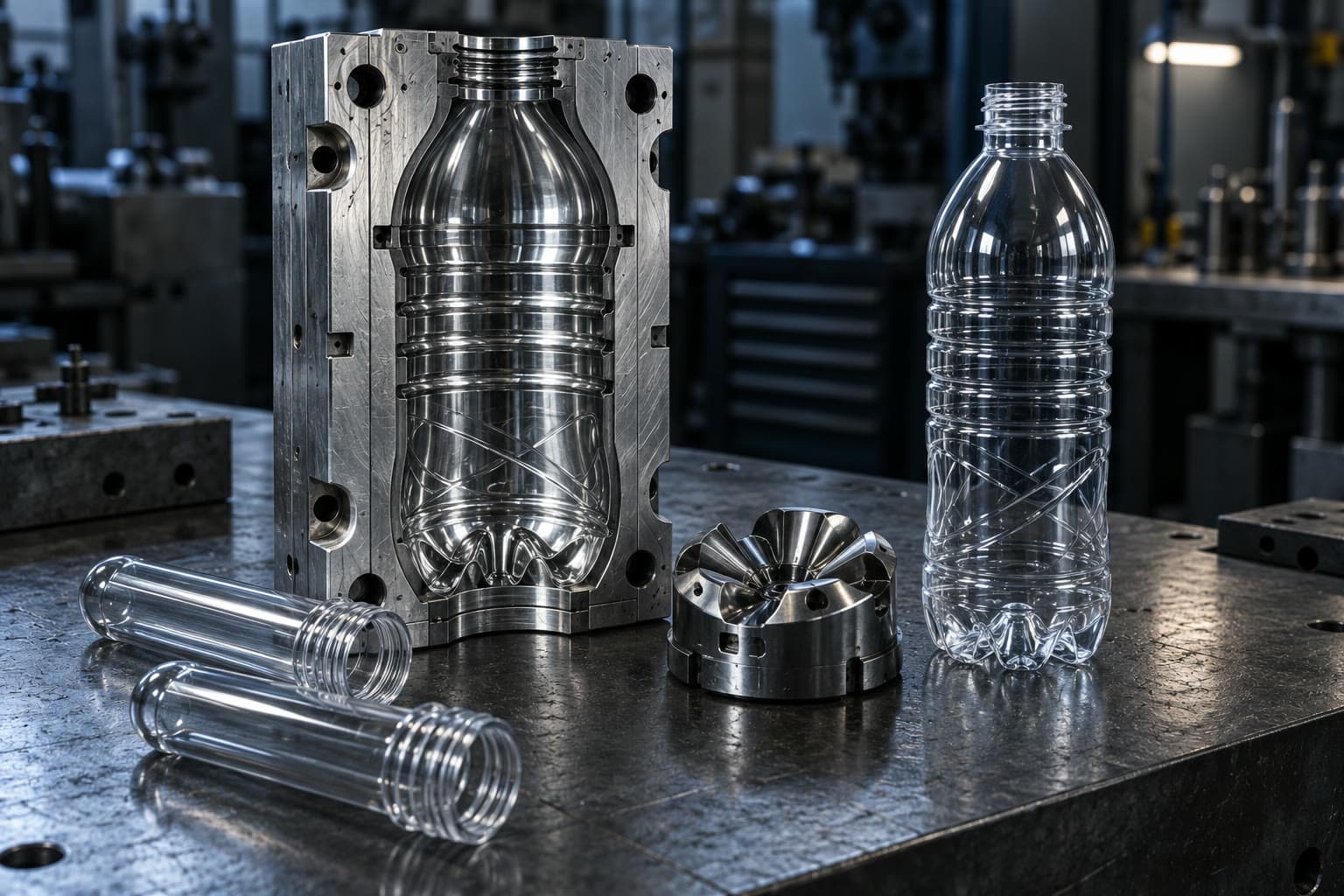
Half of a PET bottle blow mold, a base insert, preforms and a finished bottle on a workbench

How a PET bottle is blown

First, a preform is injection molded — a blank with a finished neck and thread. The preform is then heated, placed in the blow mold, stretched with a rod and blown with air. The plastic presses against the cooled walls of the mold and takes on its contour.

The neck does not change during blowing: it comes from the preform, not from the blow mold. That is why the mold is designed for a specific preform.

What a blow mold consists of

A typical mold for a PET bottle has several parts:

  • two body halves — they shape the side of the bottle with its relief, panels or label area;
  • a base insert — a separate part that can be replaced without changing the whole mold;
  • cooling channels — they determine the cycle time and how stable the dimensions are;
  • vents — they let the air out so that the relief and edges come out sharp.

Which base to choose

Carbonated drinks usually get a petaloid base with several feet: it withstands the internal pressure. For still water, oil and household liquids a simpler base works; it is easier to blow and needs less material. Hot filling requires a special design of both the bottle and the mold.

What is needed to quote the mold

To quote the mold without extra questions, prepare:

  • a drawing or 3D model of the bottle, or a sample if there is none;
  • the bottle volume and the product it will hold: carbonated, still, hot-filled;
  • preform data: neck type, weight and a drawing if you have one;
  • the blow molding machine model and the number of cavities;
  • the planned volume.

New bottle or mold modification

If only the relief, the label area or the base changes, it is sometimes enough to rework separate parts of the existing mold, for example to replace the base insert. A new mold is made when the volume, height or overall contour of the bottle changes. The decision is made after inspecting the mold and the drawings.

Service: Blow molds
Questions

Frequently asked questions

Can a mold be made from a sample bottle?

Yes. We build a 3D model of the bottle from the sample ourselves, agree it with you and then design the mold.

How does a PET mold differ from a mold for a PE canister?

PET containers are blown from a preform, while canisters and flasks made of PE and PP are blown from a parison that the extruder pushes out right before blowing. A parison mold has pinch-off edges that weld the base and cut off the excess plastic, so the designs differ.

Can the bottle base be changed without a new mold?

Often, yes: the base is a separate insert, and a new one can be made for a new design if the other bottle parameters stay the same.

Need a blow mold?

Send a drawing or a model, or describe the task — we will calculate the cost and lead time.

Send a drawing for a quote

Other articles

  • Worn mold with rust marks, an old and a new ejector pin, and a part with flash along its edge

    Mold repair: signs of wear and what to do

    A mold wears gradually, and the first signs show up on the parts: flash, scratches, marks on the surface, dimensional drift, sticking. If the repair is done in time, it is usually enough to restore individual surfaces and replace worn components. Below is what to watch for and what to do once a problem appears.

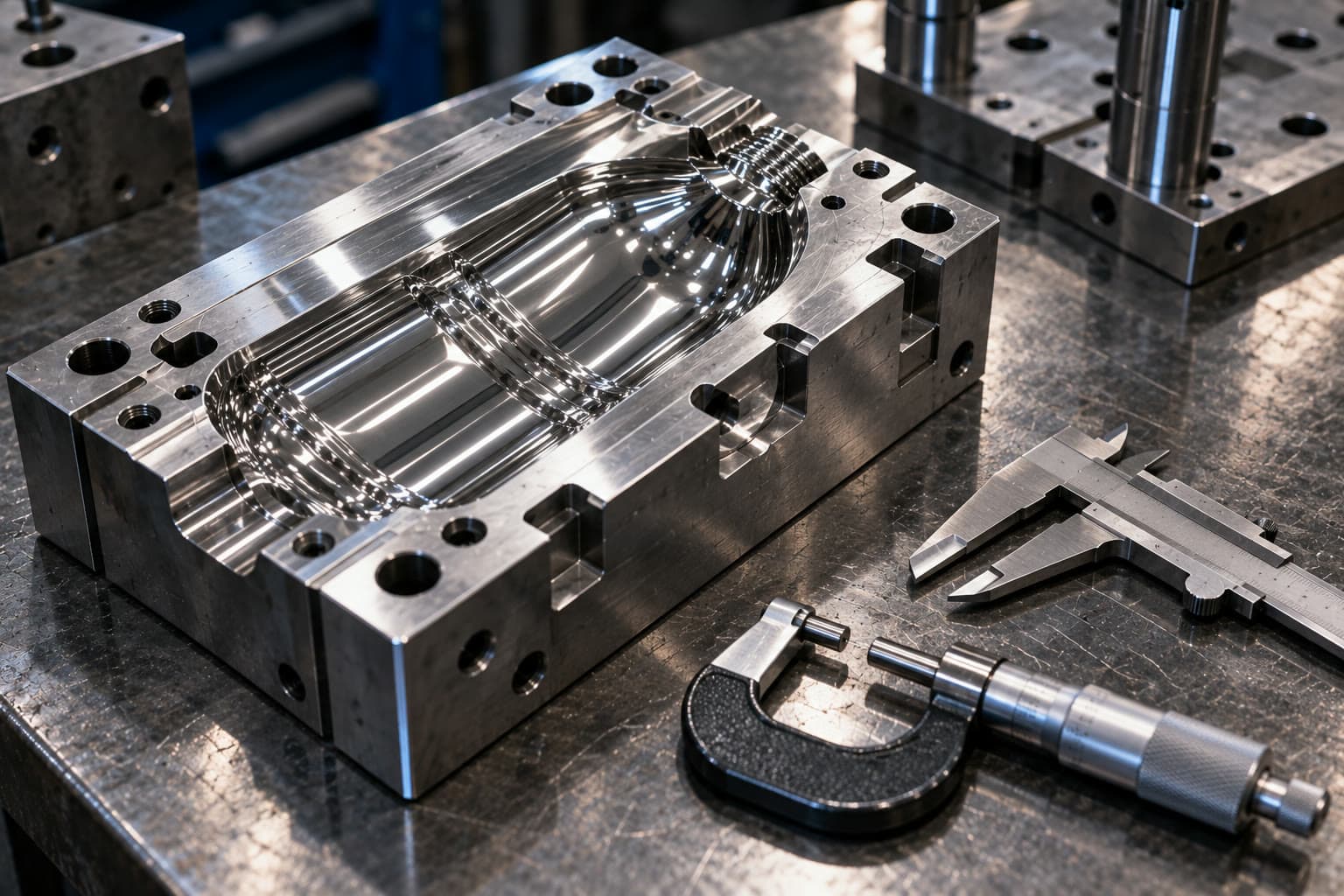
  • Half of a bottle blow mold next to a caliper and a micrometer

    How to prepare a drawing for an injection mold quote

    To quote an injection mold we need a 3D model or a drawing of the part, its material and the planned volume. The more precise the data, the faster and more accurate the estimate of cost and lead time. Below is what exactly to prepare and how to avoid extra back-and-forth.

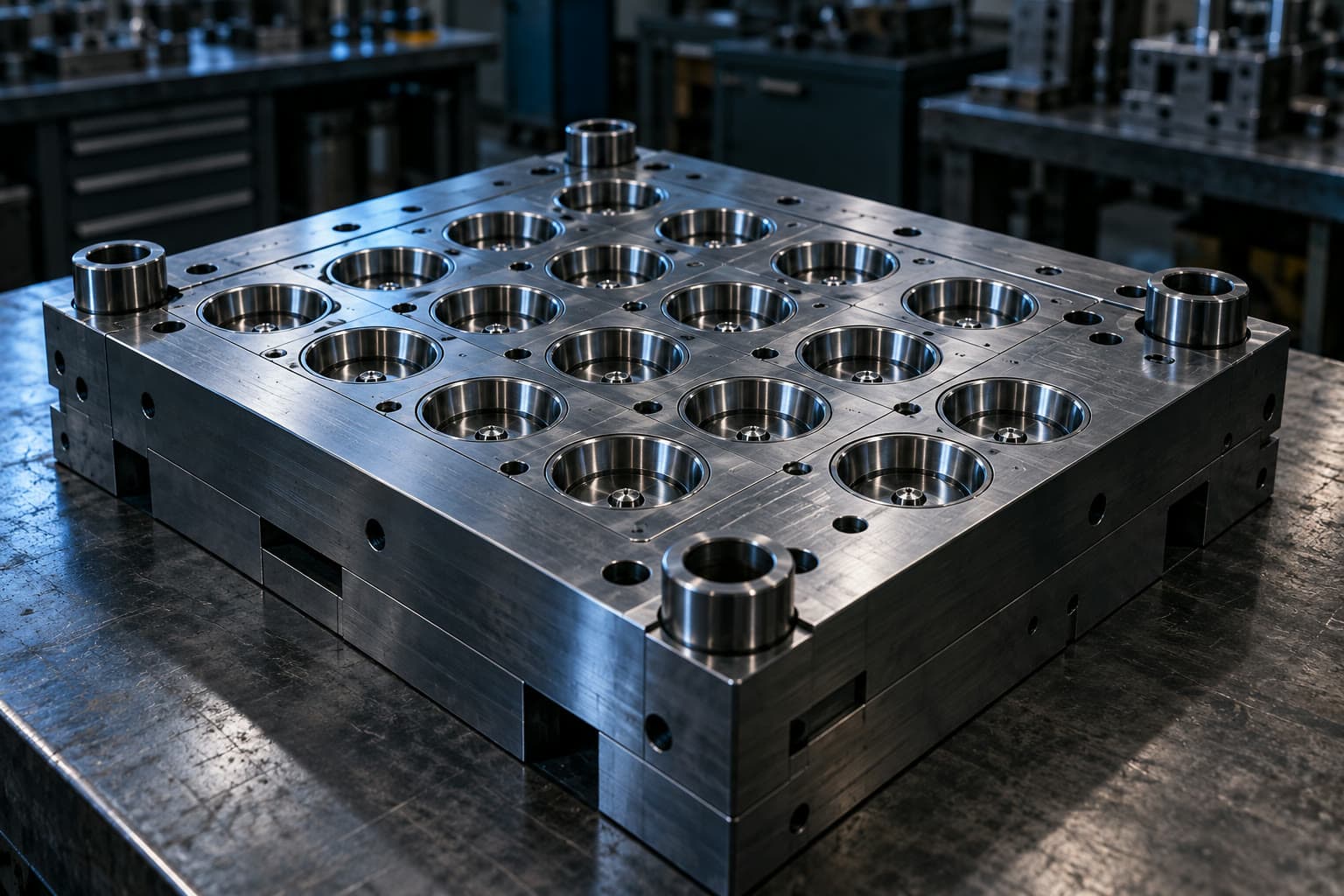
  • Multi-cavity injection mold with round cavities on a workbench

    How much does an injection mold cost?

    There is no single price for an injection mold: it is calculated for a specific part. At MTECHPLAST a mold costs from USD 1,000 and takes 1 to 5 months to make. The cost depends on the size and complexity of the part, the number of cavities, the steel and its heat treatment, the runner system, surface and accuracy requirements, and the tool life you need. Below is how each factor affects the price and where you can save without losing quality.

Send a drawing